


Are you looking for a famous coral reef for coral reef scuba diving or maybe just visiting?
Coral reefs cover just 1% of the ocean floor, yet they support 25% of all marine life. These underwater ecosystems are full of colorful corals, tropical fish, and larger marine creatures like manta rays and sharks.
For divers and snorkelers, exploring a coral reef feels like entering a different world. Clear blue waters, vibrant sea life, and stunning coral formations make each dive unforgettable. Some reefs are still thriving, while others face threats from climate change and pollution.
In this article, we’ll take you through 10 of the best coral reefs in the world. From the crystal-clear waters of the Maldives to the soft corals of Fiji, each reef offers something special. Whether you love snorkeling, diving, or just admiring the beauty of the ocean, these reefs are worth exploring.
1. Coral Reefs of the Maldives – A Diver’s Paradise
The Maldives has 1,200+ coral islands grouped into 26 atolls. These islands sit in the warm waters of the Indian Ocean, making them perfect for coral growth.
You can explore colorful coral gardens filled with fish, turtles, and reef sharks. Manta rays and whale sharks swim here all year. Clear blue waters make it easy to see marine life up close.
The best time to visit is November to April. During these months, the sea stays calm, and visibility is at its best. You can enjoy clear dives and spot more marine creatures.
Banana Reef, HP Reef, and Maaya Thila are some of the best dive sites.
| Dive Site | Highlights |
|---|---|
| Banana Reef | Colorful coral, reef sharks, large schools of fish |
| HP Reef | Vibrant coral walls, strong currents, manta rays |
| Maaya Thila | Night diving, white-tip reef sharks, soft corals |
2. Rainbow Reef, Fiji – The Soft Coral Capital of the World
Rainbow Reef sits in the Somosomo Strait, between Taveuni and Vanua Levu. Warm currents flow through this area, helping corals grow and stay healthy.
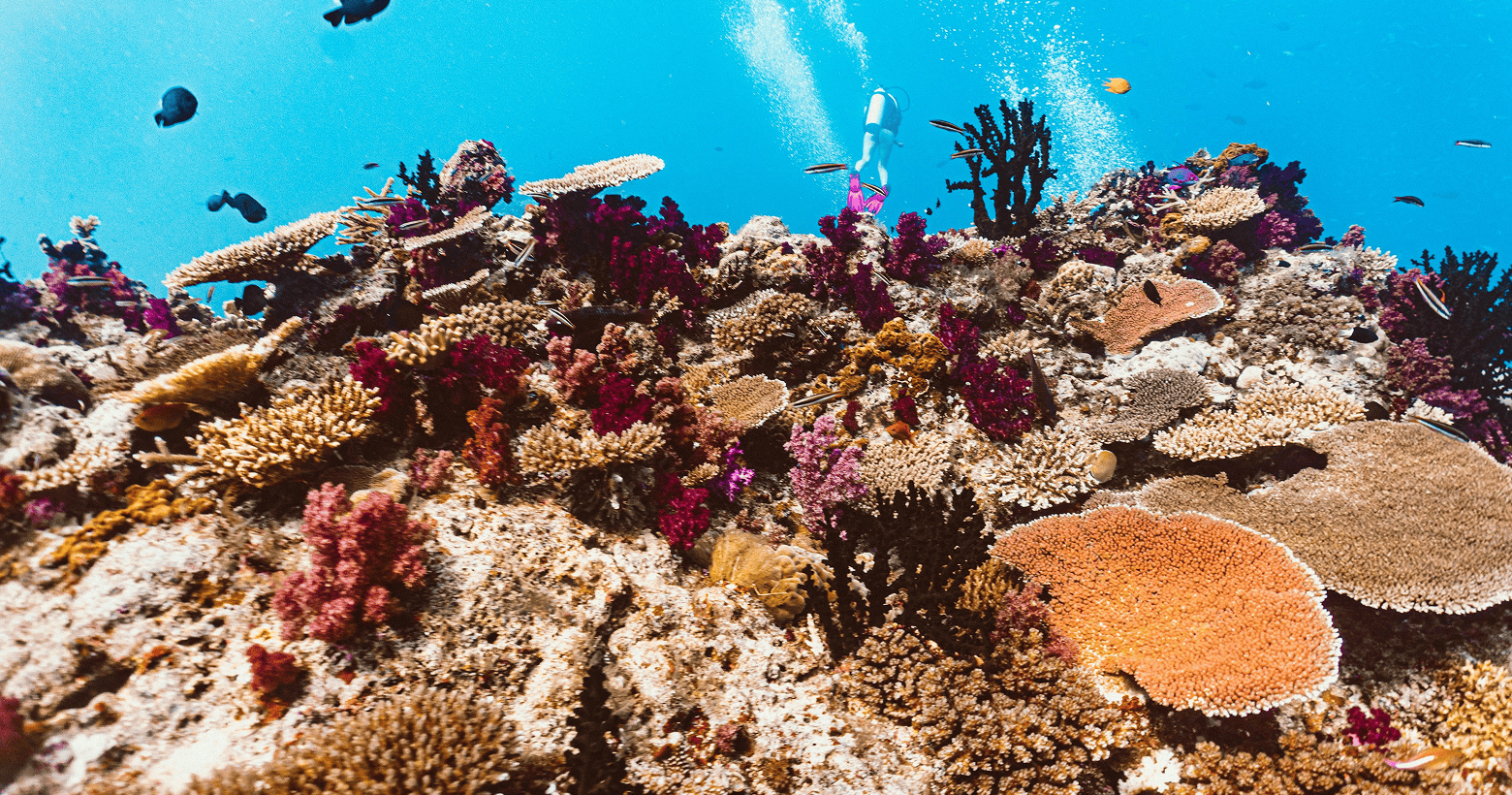
This reef is famous for its soft corals. When the current is strong, the corals open up, covering the reef in bright colors. You can see shades of pink, purple, red, and yellow.
Many marine creatures live here. You might spot reef sharks, barracudas, and rays. Schools of fish swim through the coral, creating an amazing ocean scene.
The best time to visit is April to October. The water stays clear, and the marine life is most active.
| Dive Site | Highlights |
|---|---|
| The Great White Wall | A deep wall covered in soft white corals |
| The Zoo | Strong currents, large fish, and barracudas |
3. Great Barrier Reef, Australia – The World’s Largest Coral Ecosystem
The Great Barrier Reef stretches over 2,600 km along Australia’s northeast coast. It is the largest coral reef system in the world and home to over 1,500 fish species. The reef also has hundreds of coral types, sea turtles, and sharks.
Many areas are great for diving and snorkeling. The waters are clear, and the marine life is diverse. You can explore shallow coral gardens or deep reef walls.
In recent years, parts of the reef have faced coral bleaching due to rising sea temperatures. Conservation efforts are in place to protect the reef and help it recover. Responsible diving and tourism can help keep this natural wonder alive for future generations.
Here are some top locations that you would not want to miss there.
| Location | Highlights |
|---|---|
| Ribbon Reefs | Colorful coral formations, sea turtles, large fish schools |
| Osprey Reef | Deep walls, sharks, and rich ocean life |
| Heron Island | Shallow reefs, turtles, and reef fish |
4. Raja Ampat, Indonesia – The Most Biodiverse Reef System
Raja Ampat sits in the Coral Triangle, a region known for its rich marine life. This reef system holds 75% of all known coral species, making it one of the most diverse underwater ecosystems in the world.
The reefs are full of life. You can see pigmies seahorses, wobbegong sharks, and large schools of fish. Strong waves bring nutrients, helping the coral grow and keeping marine creatures active.
The best time to visit is October to April. The water is calm, and visibility stays high, making it perfect for diving.
Here are some of the best dive sites in Raja Ampat.
| Dive Site | Highlights |
|---|---|
| Cape Kri | Highest recorded fish diversity, strong waves, vibrant corals |
| Misool | Soft coral gardens, rich ocean life, hidden caves |
| Blue Magic | Large fish schools, colorful coral walls |
5. Belize Barrier Reef – A Caribbean Gem
The Belize Barrier Reef is the second-largest coral reef system in the world, stretching 300 km along Belize’s coastline. It is part of a vast ecosystem filled with vibrant coral and diverse fish species.
One of its most famous spots is the Great Blue Hole, a massive underwater sinkhole. Divers from around the world visit to explore its deep blue waters and unique limestone formations.
Many species thrive in this reef. You may see nurse sharks, bright coral structures, and large fish schools while exploring its waters.
The best time to visit is April to June when the waters are calm, and visibility is at its best.
Here are some of the top dive spots there.
| Dive Destination | Highlights |
|---|---|
| Great Blue Hole | Deep vertical drop, cave formations, unique sea creatures |
| Hol Chan Marine Reserve | Shallow reefs, colorful fish, and abundant coral growth |
| Turneffe Atoll | Clear waters, rich biodiversity, and beautiful reef formations |
6. Red Sea Coral Reef, Egypt – Resilient and Thriving
The Red Sea Coral Reef is one of the oldest reefs. It stretches along the coast of Egypt and is famous for its bright corals and large fish species. The clear, warm water makes it a great place for diving all year round.
This reef is home to over 300 coral species and 1,200 types of fish. Many of these species can’t be found anywhere else. Divers often spot large fish, reef dwellers, and colorful coral formations.
The best time to visit is March to May and September to November. The water stays warm, and visibility remains excellent during these months.
| Dive Destination | Highlights |
|---|---|
| Blue Hole | Deep vertical sinkhole, unique rock formations |
| Ras Mohammed | Diverse fish populations, vibrant coral structures |
| Elphinstone Reef | Steep walls, larger fish species, stunning coral growth |
7. Palau Coral Reefs – Pristine and Protected
Palau’s coral reefs sit in the UNESCO-listed Rock Islands. These reefs are home to many species of coral and provide shelter for a wide range of sea creatures. Warm waters and clear visibility make this a great place for diving and snorkeling.
One of the most unique spots is Jellyfish Lake. Here, you can swim among thousands of stingless jellyfish as they drift through the water. This rare experience makes the lake a must-visit site.
Palau’s reefs are full of life. You may see sharks, barracuda schools, and various species of fish. The area also attracts marine mammals, which sometimes pass through these waters.
Some reefs in Palau form fringe structures, growing along the edges of islands. These reefs are easy to access and full of beautiful coral formations. The best time to visit is November to April, when the water stays clear.
| Dive Destination | Highlights |
|---|---|
| Jellyfish Lake | Swim with stingless jellyfish in a unique saltwater lake |
| Blue Corner | Strong water movement, large schools of fish |
| German Channel | Known for rich coral gardens and passing sea creatures |
8. New Caledonia Barrier Reef – The Hidden Gem
The New Caledonia Barrier Reef stretches 1,500 km and is one of the largest double-barrier reefs. It surrounds the New Caledonia archipelago, creating a rich oceanic ecosystem.
The reef encloses a vast lagoon covering over 9,000 square miles. Its clear waters make it easy to see the colorful coral and the many fish swimming through the reef. Divers often spot dolphins gliding through the water alongside schools of fish.
This reef sits in the South Pacific, offering some of the nicest diving in the region.
The best time to visit is April to November. During these months, the water is calm, and visibility is at its best.
| Dive Destination | Highlights |
|---|---|
| Prony Needle | Towering coral spires, deep diving experience |
| Dumbéa Pass | Clear waters, diverse sea life, coral-covered walls |
9. Tubbataha Reefs, Philippines – A UNESCO World Heritage Site
The Tubbataha Reefs sit in the Sulu Sea and can only be reached by liveaboard. This remote location keeps the reefs untouched and full of life. The waters here are home to over 600 fish species, along with different types of fish and other rare sea creatures.
The reef is rich in hundreds of species of coral, creating a vibrant oceanic world. Many invertebrate species also thrive here, adding to the reef’s unique ecosystem. Some animals found in Tubbataha are endemic, meaning they don’t exist anywhere else.
Divers often spot sponges covering the reef walls. These soft structures provide shelter for small sea creatures and colorful fish.
The best time to visit is March to June, when the sea is calm and diving conditions are ideal.
| Dive Destination | Highlights |
|---|---|
| North Atoll | Rich coral formations, large fish schools, deep walls |
| South Atoll | Fish sightings, sea fans, untouched coral reefs |
| Jessie Beazley Reef | Clear waters, strong marine biodiversity, bright coral growth |
10. Ningaloo Reef, Australia – A Whale Shark Haven
The Ningaloo Reef runs along the coast of Western Australia and is one of the world’s largest fringing reefs. Unlike deeper reefs, this one sits close to shore, making it easy to explore. Snorkelers and divers can swim just a few meters from the beach and enter a stunning oceanic world.
This reef is famous for whale shaarks, which visit from March to July. During this time, you can swim alongside these gentle giants in calm, clear waters. The reef also has beautiful coral reefs, where many sea creatures find shelter.
Ningaloo is home to vibrant reefs with a mix of soft and species of hard coral. These corals provide food and shelter for a variety of fish.
The best time to visit is March to July, when the water is warm, and marine activity is high.
| Snorkeling Site | Highlights |
|---|---|
| Turquoise Bay | Shallow coral gardens, colorful fish, easy beach access |
| Oyster Stacks | Clear waters, diverse marine species, lively coral structures |
Conclusion
Exploring the world’s best coral reefs is an unforgettable experience. Whether you want to swim with majestic sea creatures, glide past vibrant coral walls, or explore deep ocean landscapes, these reefs provide some of the coolest diving in the world.
For those looking for a luxury diving adventure, Spirit Liveaboards offers the perfect experience. Our expert guides know the Maldives and Fiji better than anyone, ensuring you visit the coolest dive destinations based on ocean conditions. Our luxury yachts provide top-tier comfort, safety, and personalized service, making every dive trip one to remember.
Join Spirit Liveaboards and experience the best coral reefs in the Maldives and Fiji. Book your adventure today!
FAQs
1. How do underwater ecosystems protect coastlines and ocean habitats?
Reefs act as natural shields, absorbing wave energy and reducing the impact of storms. This helps prevent erosion and flooding along coastal areas. These oceanic structures also provide shelter and food for countless species, maintaining a balanced ocean environment.
2. What is the difference between barrier formations and coastal reefs?
A barrier formation is located farther from land, separated by deep waters. These structures form massive, continuous systems, like the well-known reef in Australia. Coastal reefs, on the other hand, grow close to shore with little separation, making them easier to access.
3. How can divers and snorkelers help protect ocean habitats?
You can help by avoiding contact with ocean structures, using eco-friendly sunscreen, and not collecting anything from the ocean. Choosing responsible dive operators and supporting conservation efforts also play a big role in preserving these ecosystems.
4. Which locations are best for beginner divers?
For beginners, spots with calm waters, easy access, and shallow depths are ideal. Turquoise Bay (Western Australia), Hol Chan Marine Reserve (Belize), and Maaya Thila (South Asia) are great choices because they offer gentle conditions and an abundance of sea creatures in shallow waters.
5. What is mass spawning, and where can you see it?
Mass spawning is a rare natural event where oceanic organisms release eggs and sperm into the water all at once. This usually happens once a year, influenced by the moon phase and water temperature. Some of the best places to witness this phenomenon include the Great Barrier Reef (Australia), Palau, and South Asia, typically between October and December.


Leave your comment: