

Air consumption is one of the most critical factors influencing the quality and duration of your scuba diving experience. Efficient air use not only allows you to extend your bottom time but also ensures a safer and more enjoyable dive. Whether you’re a beginner or an experienced diver, improving your air consumption is a skill that can elevate your diving adventures.
In this article, we’ll explore 9 practical and actionable tips to help you breathe more efficiently underwater.
What Is Air Consumption in Scuba Diving?
Air consumption refers to the rate at which a scuba diver uses the air from their tank while underwater. Several factors, including breathing rate, depth, buoyancy, and physical effort during the dive influence it. Efficient air consumption is essential for maximizing dive time, reducing stress, and ensuring safety.
A key concept related to air consumption is the Surface Air Consumption (SAC) rate, which measures how much air a diver uses at the surface and helps estimate air usage at different depths. Understanding and improving air consumption allows you to make the most of each dive and explore underwater worlds with greater confidence and control.
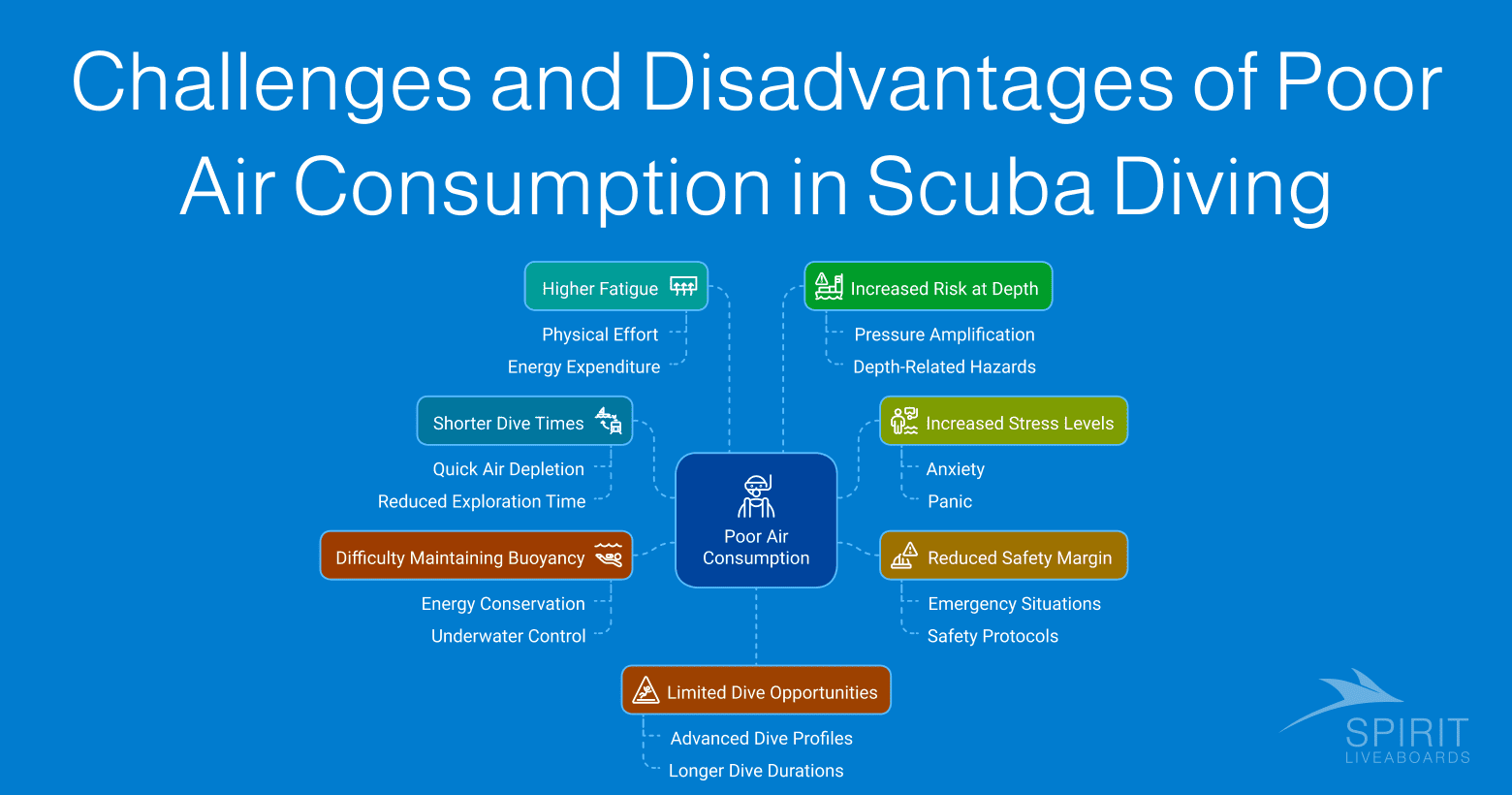
However, poor air consumption can present several challenges and disadvantages:
- Shorter dive times, as high air usage leads to running out of air more quickly.
- Increased stress levels, especially for newer divers, cause further air depletion.
- Reduced safety margin, leaving little reserve for emergencies.
- Difficulty maintaining buoyancy, making it harder to conserve energy.
- Higher fatigue, as inefficient air use often accompanies increased physical effort.
- Increased risk at depth, where greater pressure amplifies air consumption.
- Limited dive opportunities, as high air usage, can restrict longer or more advanced dive profiles.
Now, let’s see 9 ways to improve it.
1. Master Your Buoyancy
Buoyancy control is one of the most important skills in scuba diving. When you master it, you use less energy, and this helps you save air. Good buoyancy allows you to stay neutral in the water, so you don’t waste air adjusting your position.
To improve your buoyancy, start with your weights. Use the right amount so you are not too heavy or too light. Practice hovering in place without moving your fins.
Pay attention to your breathing too. Slow, deep breaths help you stay calm and keep your buoyancy stable. Check your psi regularly to make sure you are using air efficiently. This will also help you understand your consumption rate.
When your buoyancy is under control, you’ll move smoothly through the water and use less air per minute. This makes your dives more enjoyable and gives you more time to explore.
2. Practice Controlled Breathing
Your breathing rate greatly affects the air you use while diving. If you breathe quickly or shallowly, you use up the air in your cylinder faster. Slow and deep breaths help you take in enough oxygen without wasting air. Controlled breathing also keeps you calm and relaxed underwater, which reduces the amount of air you need.
To practice controlled breathing, start by focusing on your inhale and exhale. Breathe in slowly through your nose and let your lungs fill completely. Then exhale gently and fully. Try to keep your breathing rhythm steady and avoid holding your breath. Holding your breath can lead to changes in your buoyancy and make you use more air to correct it.
Another useful technique is to exhale slowly and consistently. It helps you release just enough air to maintain balance in your BCD. This keeps you from moving up or down unnecessarily, which can waste energy and air.
You can also practice breath control on the surface. Use a snorkel to simulate underwater breathing. Measure how much air you use by noting the cubic feet per minute when diving. This will help you track improvements in your breathing efficiency over time.
3. Streamline Your Gear
Streamlining your gear is important for reducing drag and saving energy underwater. When your gear creates less resistance, you move more easily through the water. This helps you use less energy, which lowers your air consumption rate.
Start by securing all loose items on your setup. Keep hoses close to your body and avoid letting anything dangle. Dangling gear creates drag and makes it harder for you to swim efficiently. If you’re a new diver, spend time adjusting your gear before your dive to make sure everything is in the right place.
Check your weight setup carefully. Being overweight can make it harder to maintain neutral buoyancy.
Your equipment should also fit you properly. Ill-fitting gear can shift during the dive and affect your movement. Test your setup in a pool or shallow water to make sure it feels comfortable. If your BCD doesn’t sit right, or your fins are too tight, you’ll use extra energy to compensate.
4. Improve Your Fitness
Your physical fitness has a big impact on your diving performance. When you’re in better shape, your body needs less oxygen, and you breathe more efficiently. This lowers your surface air consumption (SAC) and helps you conserve air during your dives.
Cardio exercises, like swimming, running, or cycling, improve your lung capacity and endurance. Stronger lungs let you breathe easier and stay calm underwater. Strength training is also helpful. Building muscles reduces the physical exertion needed for swimming and controlling your movements underwater.
Flexibility exercises, like yoga or stretching, improve your range of motion. This helps you move more smoothly in the water, which reduces drag and saves energy. You can also practice breath control exercises. Deep breathing techniques help you get used to slower, controlled breaths when using your regulator.
5. Dive More Slowly
Diving slowly helps you conserve energy and use less air. When you move quickly underwater, you burn more energy, which makes you breathe faster. This increases your air consumption and shortens your dive time. Slowing down lets you stay relaxed and enjoy the dive without wasting air.
Pay attention to your fin kicks. Use slow, controlled movements instead of fast, forceful kicks. Fast kicks create more resistance and make you work harder. Keep your legs straight and focus on efficient, smooth strokes to glide through the water.
Avoid rushing from one spot to another. Take your time to look around and enjoy the dive site. When you move calmly, you reduce the effort needed to adjust your position or change direction.
Plan your dive path carefully. Following a simple route with fewer changes in depth helps you avoid unnecessary effort. Constantly swimming up and down uses more energy and can increase your air consumption.
6. Stay Calm and Relaxed
Keeping calm and relaxed underwater is one of the best ways to conserve air. When you stay relaxed, your breathing remains steady, which helps you use air more efficiently. Stress or anxiety can make your breathing quick and shallow, causing you to use up your air faster.
Prepare yourself mentally before the dive. Go over your plan and ensure you feel comfortable with your gear and dive conditions. When everything is organized, you’ll feel more confident and less likely to become stressed.
During your dive, move slowly and avoid rushing. Fast movements create more resistance, making you work harder and use more air. Staying relaxed helps you maintain smooth, controlled motions.
If you start feeling uneasy, pause for a moment. Stop swimming, float comfortably, and focus on calming yourself. A relaxed approach helps you adapt to changes in pressure or other factors related to the atmosphere.
7. Optimize Your Dive Profile
A well-planned dive profile can help you conserve energy and make the most of your air supply. It allows you to dive efficiently and enjoy more time exploring underwater.
Begin by planning your dive with gradual changes in depth. Avoid constantly ascending and descending, as this increases your effort and air consumption. Stick to a steady depth for most of the dive, and ascend slowly toward the end.
Track your performance after every dive. If you’re on a dive trip, take note of how efficiently you used your air and what adjustments you can make. Use this feedback to refine your approach for the next dive.
Proper planning helps you move smoothly through the water, conserve energy, and ensure your air supply lasts longer. A thoughtful dive profile also makes your dives safer and more enjoyable.
8. Check and Maintain Your Equipment
Properly maintained equipment is essential for safe and efficient diving. Faulty or poorly maintained gear can lead to unnecessary air loss and make your dive more challenging. Taking care of your gear helps you dive smoothly and conserve your air supply.
Before every dive, inspect your equipment thoroughly. Check your regulator for leaks and ensure it delivers air smoothly. Examine your hoses to make sure they are free of cracks or damage. A small leak in a hose can waste air during the dive.
Test your BCD to confirm that it inflates and deflates properly. If it isn’t working correctly, it can make buoyancy control harder and lead to unnecessary energy use. Inspect your dive computer to ensure it’s functioning and has accurate battery levels.
Regular maintenance is just as important as pre-dive checks. Take your regulator and other gear for servicing as recommended by the manufacturer. Clean and store your equipment properly after each dive trip to prevent wear and tear.
9. Track and Analyze Your SAC Rate
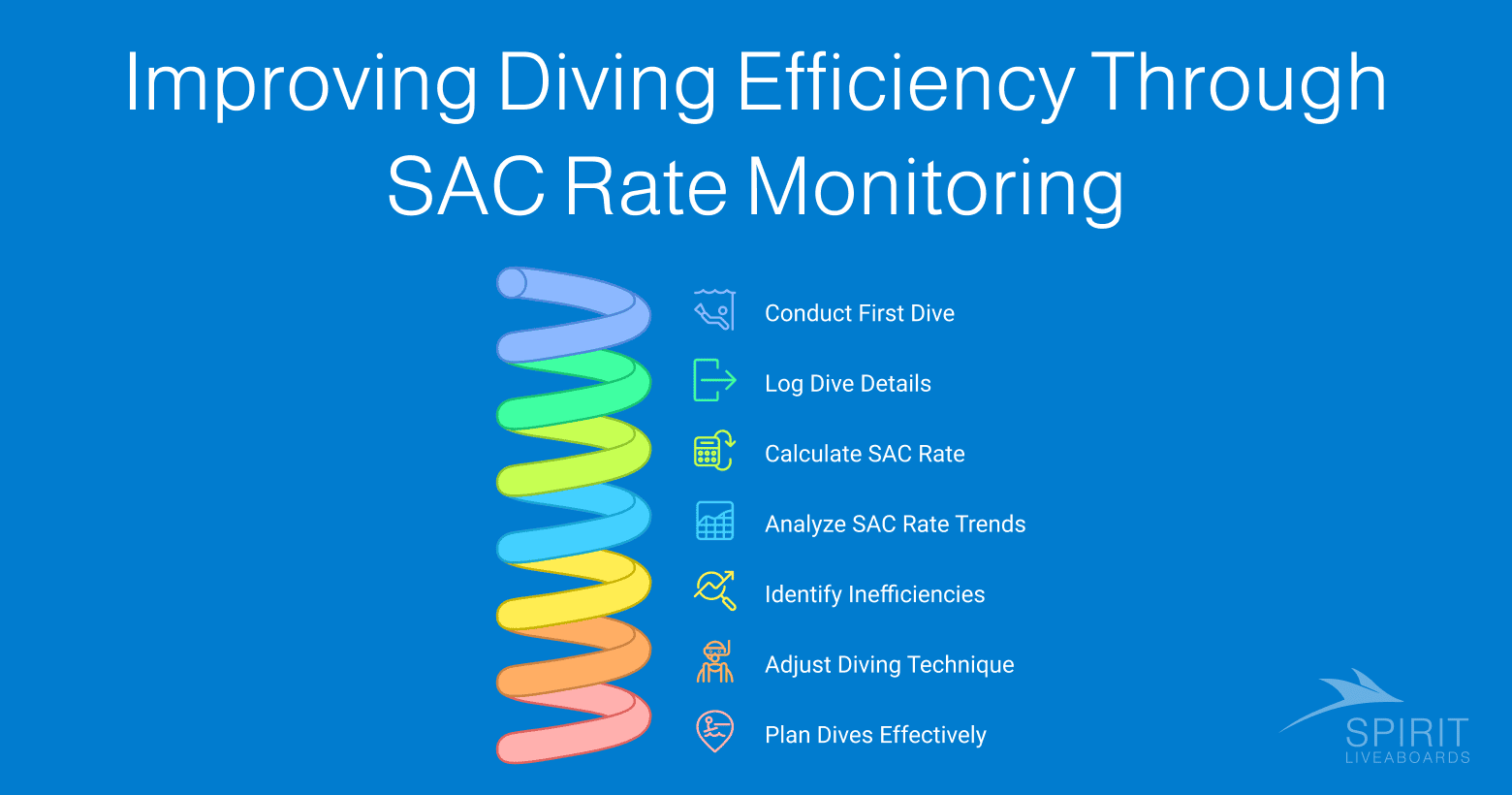
Monitoring your SAC rate is a great way to become more efficient and confident as a diver. It helps you understand how your breathing habits and dive conditions impact your air usage.
After your first dive, log details like the starting and ending tank pressure, your average depth, and dive duration. Use these numbers to calculate your SAC rate. Dive computers can help automate this, but you can also do it manually.
Look at your SAC rate trends over multiple dives. If you notice it’s higher than expected, check if you’re swimming too fast, overexerting yourself, or struggling with buoyancy control. Make small adjustments to your technique on your next dive to improve efficiency.
By consistently tracking and analyzing your SAC rate, you’ll gain insights that can help you plan your dives more effectively. This habit not only improves your air efficiency but also ensures a smoother and more enjoyable experience underwater.
Conclusion
Improving air consumption is essential for safer, longer, and more enjoyable dives. By focusing on techniques like controlled breathing, proper buoyancy, streamlined gear, and tracking your SAC rate, you can boost your efficiency and confidence underwater. Each tip builds your skills and makes diving more comfortable and rewarding.
For a truly unforgettable diving experience, consider joining Spirit Liveaboards. We offer luxury trips in the Maldives and Fiji, combining adventure with high-end comfort. Our expert guides, with decades of experience, ensure you explore the best dive sites based on ideal conditions. With personalized service, premium amenities, and a strong focus on safety, Spirit Liveaboards is your gateway to the ultimate liveaboard diving adventure. Explore the underwater world with us and make every dive extraordinary.
FAQs
Why is air consumption important in scuba diving?
Efficient air consumption allows you to extend your dive time and enjoy the underwater world without the stress of running out of air prematurely. It also helps improve your buoyancy and overall diving experience.
What are the key factors that affect air consumption?
Several factors influence air consumption, including your fitness level, breathing technique, buoyancy control, exposure to stress or anxiety, dive depth, water temperature, and the efficiency of your dive equipment.
How can I improve my breathing while diving?
Practice slow, deep, and controlled breathing both on land and underwater. Focus on exhaling fully to reduce carbon dioxide buildup, and avoid shallow, rapid breathing.
Does buoyancy affect air consumption?
Yes! Poor buoyancy control forces you to use more energy while swimming, which increases your air consumption. Perfecting neutral buoyancy helps you move efficiently and conserves your air supply.
Is diving fitness important for reducing air consumption?
Absolutely. Being physically fit improves your body’s oxygen efficiency, reduces strain during dives, and makes your breathing more relaxed, ultimately lowering your air consumption.
Can my dive gear impact air consumption?
Yes. Well-maintained, properly fitted dive gear reduces drag and improves your comfort, making your dives more energy-efficient. This leads to better air consumption.
How can I stay calm to avoid wasting air?
Practice mindfulness and relaxation techniques before and during your dive. Staying calm helps you breathe slower and conserve air. Diving within your comfort level and with trusted buddies also reduces stress.
Does water temperature affect my air consumption?
Colder water can make your body work harder to stay warm, leading to faster air consumption. Wearing appropriate thermal protection helps you stay warm and relaxed, conserving your air.
How long does it take to see improvements in my air consumption?
Improvements vary from diver to diver. With regular practice of controlled breathing, better buoyancy, and fitness, you’ll likely notice positive changes within a few dives.
Can a dive professional help me improve my air consumption?
Yes, working with a dive instructor can help you identify areas for improvement and refine your techniques, including buoyancy control and breathing strategies.


Leave your comment: