


Learning how to hold breath underwater can open up a whole new world for you.
Underwater breath-holding is training your body and mind to stay calm. When you breathe better and stay relaxed, you can enjoy diving without feeling rushed.
This skill is useful for anyone who loves water activities. It makes your dives more fun and allows you to experience underwater adventures fully.
What Happens to Your Body When You Hold Your Breath? Science Behind Breath Holding
When you hold breath, your body goes through several important changes that help you stay underwater. Understanding these changes can help you train effectively and safely.
Carbon Dioxide and Oxygen Levels
When you stop breathing, the O₂ in your blood starts to decrease because your body uses it for energy. At the same time, carbon dioxide begins to build up in your bloodstream. This rise in CO₂ is what triggers the strong urge to breathe, not the lack of O₂. Training your body to tolerate higher CO₂ levels allows you to extend your breath-hold safely.
The Dive Reflex
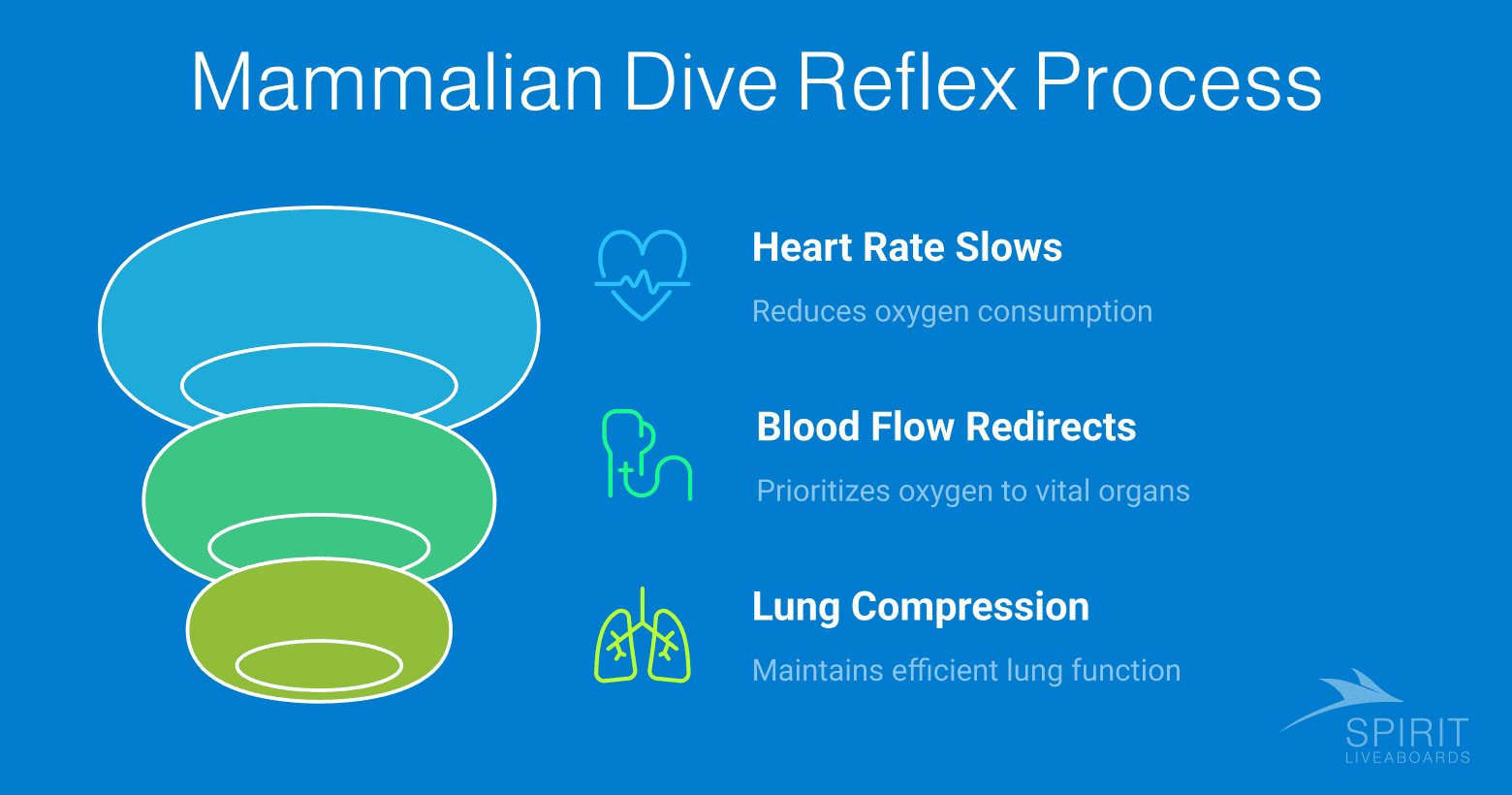
Your body has a natural response called the “mammalian dive reflex.” This reflex activates when your face touches water and helps you conserve O₂:
- Heart Rate Slows Down: Your heart beats slower to reduce O₂ use.
- Blood Flow Redirects: More blood is sent to your brain and heart while less goes to your limbs, keeping vital organs supplied with O₂.
- Lung Compression: At depth, your lungs compress due to water pressure, but the reflex helps them function efficiently.
Capacity of Lungs and Oxygen Efficiency
Your ability to hold your breath depends greatly on how much air your body can store. A greater capacity allows you to take in more O₂, providing more oxygen for your body to use. Efficient oxygen usage is just as important. Training your body to perform with less O₂ helps you stay underwater longer and more comfortably.
Regular practice strengthens your breathing muscles, making it easier to take in air and use it efficiently.
Technique 1: Relax Your Mind & Body
When you relax your entire body as well as your mind, it becomes easier to hold your breath for a long time.
Relaxation helps lower your heart rate, which slows down how quickly your body uses oxygen. This gives you more time to stay underwater without feeling the need to breathe. Staying calm also helps you avoid wasting energy, so you can focus better.
How to Relax Your Mind & Body
Step 1: Find a Calm Place
Choose a quiet and comfortable place to practice. If you’re in water, stay in a shallow area where you feel safe. Being comfortable helps you relax more easily.
Step 2: Sit or Lie Down
If you’re practicing on land, sit or lie down in a comfortable position. Keep your body loose and avoid tensing your muscles. If you’re in the water, float calmly or lie face down in a relaxed position.
Step 3: Take Deep Breaths
Breathe in deeply through your nose. Let your belly rise as your body fill with air. Exhale slowly through your mouth. Repeat this a few times to calm your heart rate and focus your mind.
Step 4: Clear Your Thoughts
Let go of any stress or distracting thoughts. Focus on your breathing and how your body feels. This will help you stay calm and centered.
Step 5: Practice Slow Movements (Optional)
If you’re in the water, move gently to keep your body relaxed. Avoid sudden or fast movements that can raise your heart rate and use up oxygen quickly.
Technique 2: Practice Diaphragmatic Breathing
Diaphragmatic breathing is a technique that helps you take deeper breaths by using your diaphragm instead of your chest.
When you breathe deeply, you fill your body with more air, giving your body more oxygen to use. This technique helps you stay calm and conserve energy, so you are able to hold your breath for longer periods of time. Lifeguards and swimmers often use this method to improve their breath control, especially when working in shallow water.
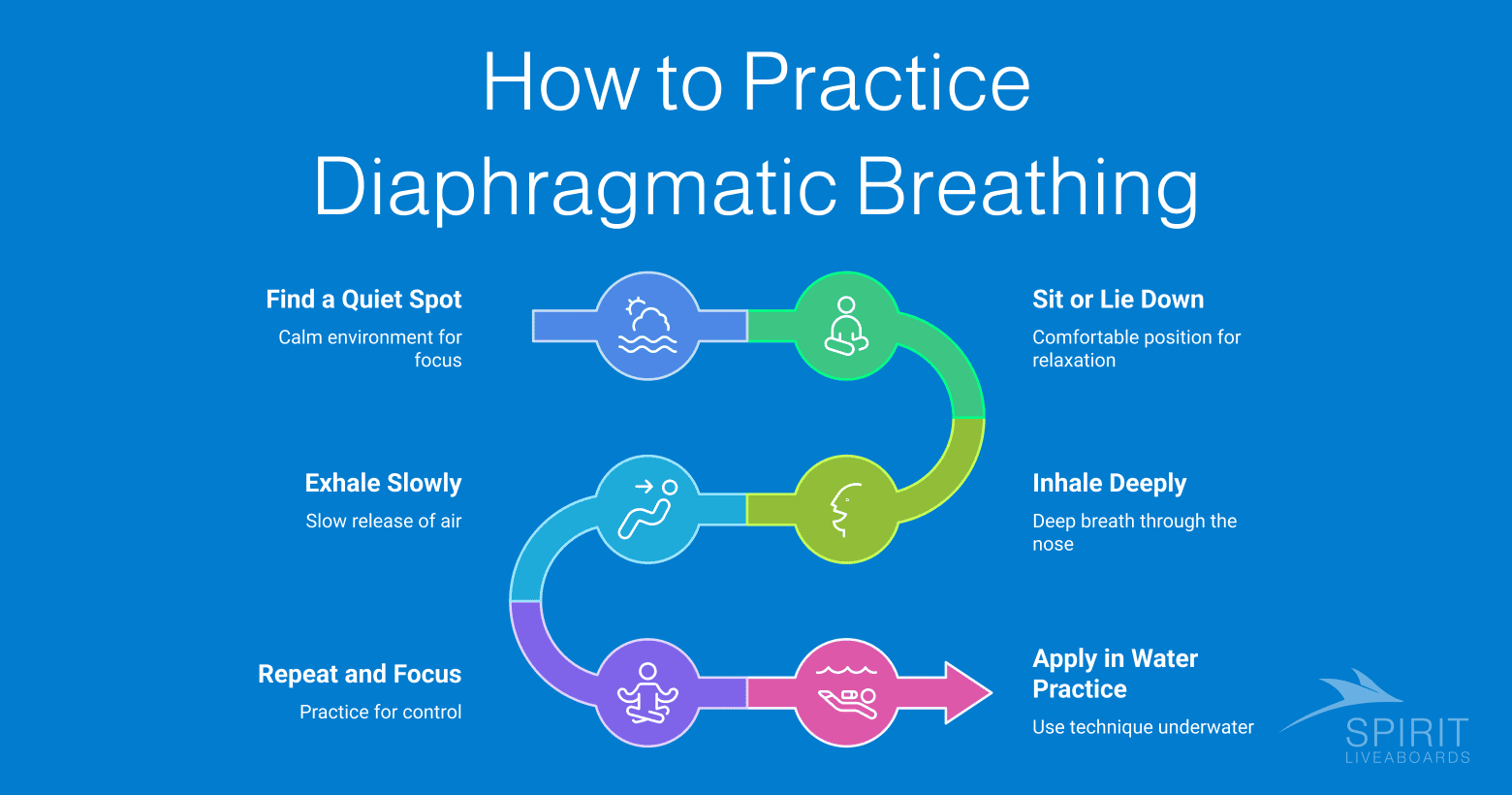
How to Practice Diaphragmatic Breathing
Step 1: Find a Quiet Spot
Start in a calm and quiet place where you can focus on your breathing. If you’re near water, shallow water is ideal, but you can also practice on land.
Step 2: Sit or Lie Down
Get into a comfortable position. Sit upright or lie down flat with your hands resting on your belly. Relax your shoulders and avoid tensing your muscles.
Step 3: Inhale Deeply
Breathe in deeply through your nose. Focus on making your belly rise as your diaphragm pulls air into your body. Avoid shallow chest breaths here.
Step 4: Exhale Slowly
Breathe out slowly through your mouth. Let your belly fall naturally as the air leaves your body. Take your time with each exhale.
Step 5: Repeat and Focus
Repeat this cycle for several minutes. Focus on how your body feels as you breathe deeply. The more you practice, the easier it will be to control your breathing underwater.
Step 6: Apply in Water Practice
Once you feel comfortable, try using this technique before holding your breath in water. Use it to calm your body and prepare your body for a longer hold.
Technique 3: Use CO₂ Tolerance Training
CO₂ tolerance training helps your body adapt to handling more carbon dioxide in your bloodstream. When you pause your breathing, CO₂ levels rise, making you feel the need for air. By practicing this technique, you can teach your body to stay composed and hold your breath for longer.
How to Practice CO₂ Tolerance Training
Step 1: Take a Deep Inhalation
Before starting, draw air deeply into your lungs through your nose; ensure they are full, and your body is relaxed.
Step 2: Pause Your Breathing for a Short Duration
Hold the air in your body for a manageable amount of time, such as 20 or 30 seconds. Stay calm and try to relax your muscles.
Step 3: Release Air Slowly
When the time comes to release, let the air leave your body gently and at a steady pace. Avoid rushing this step, as it won’t help your recovery.
Step 4: Rest and Repeat the Process
Take a short interval to recover, allowing your body to relax. Repeat the cycle, gradually increasing the duration of each pause. Aim to push yourself slightly with each attempt.
Step 5: Practice with Safety Measures
If practicing in water, ensure someone is nearby who can assist if needed. Having a trained individual who knows life-saving techniques like CPR ensures added safety.
Step 6: Monitor Your Progress
Keep track of how long you can pause your breathing each time. With regular practice, your body will become better at managing carbon dioxide, and you’ll feel more at ease while holding your breath.
Technique 4: Practice Static Apnea
This is a method where you practice holding your breath while staying completely still. This technique helps you focus on controlling your breath without the distraction of movement. It’s a great way to improve your capacity and learn to hold your breath for longer periods.
How to Practice
Step 1: Choose a Safe Spot
If you’re practicing in water, stay in a shallow area where you feel safe. Wear goggles to keep water out of your eyes and help you stay focused. If you’re on land, sit or lie down in a comfortable position.
Step 2: Prepare Your Body
Take a few deep inhalations to fill your body with as much air as possible. Relax your body and calm your mind to conserve energy.
Step 3: Hold Your Breath
Pause your breathing and stay still. Focus on staying calm and relaxed. Set a realistic goal, such as one or two minutes, and gradually work your way up as you practice more.
Step 4: Monitor Your Progress
Keep track of how long you can hold your breath each time. Apnea helps you build endurance and train your body to use oxygen more efficiently.
Step 5: Rest Between Attempts
After each hold, take a break and recover. Repeat the process, trying to extend your time little by little. Consistent practice will help you learn to hold your breath longer and improve your confidence underwater.
Technique 5: Improve Your Capacity of Lungs
Building your capacity helps you store more air, so you can stay underwater longer. Stronger lungs make it easier to handle the pressure of being down deep and help you stay calm when you’re underwater. Regular exercises like swimming, running, or yoga can help you improve.
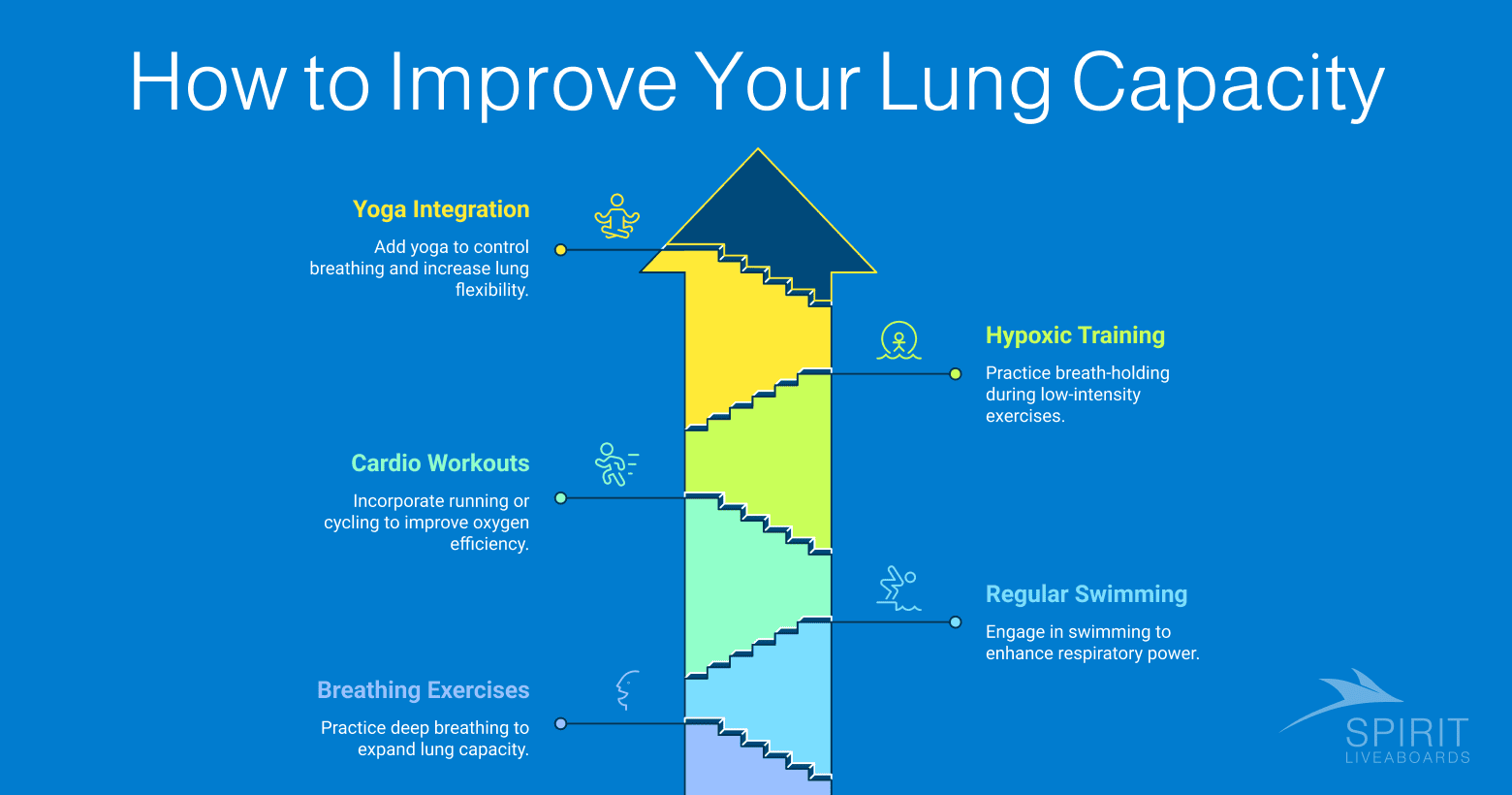
How to Improve Your Lung Capacity
Step 1: Practice Breathing Exercises
Try deep breathing drills to expand your lung capacity. Slowly take in air until your chest feels full, hold it for a few seconds, then release it steadily. This strengthens your respiratory system and prepares you for breath-holding challenges.
Step 2: Swim Regularly
Swimming is one of the best ways to increase respiratory power. A swimmer’s training focuses on controlled breathing, which helps you stay more efficient underwater. Add swimming laps to your routine to build endurance.
Step 3: Incorporate Cardio Workouts
Running or cycling helps your body use oxygen more efficiently. These exercises make your lungs stronger and your heart more alert to changes in your oxygen levels.
Step 4: Try Hypoxic Training
Practice holding your breath for short intervals during low-intensity exercises like swimming or walking. This teaches your body to work with less oxygen and prepares you for situations underwater.
Step 5: Add Yoga to Your Routine
Yoga helps you control your breathing and increase your lung flexibility. Stretching and deep breathing exercises in yoga improve your ability to stay calm at greater depth.
Conclusion
Holding your breath longer underwater opens the door to unforgettable adventures beneath the waves. By mastering the techniques outlined here, you can dive deeper, stay longer, and explore with confidence.
For an unparalleled diving experience, Spirit Liveaboards offers the perfect combination of adventure and luxury. With expert guides, personalized itineraries, and access to the finest dive sites in the Maldives and Fiji, we ensure every moment of your journey is extraordinary. Our yachts provide premium comfort and safety, making Spirit Liveaboards the ultimate choice for your next liveaboard diving adventure. Dive into excellence with us and create memories that will last a lifetime.
FAQs
Why is learning to hold your breath important for diving?
Holding your breath longer improves your comfort and control underwater, especially during free diving or when snorkeling. It also helps you conserve energy and oxygen, enhancing your overall underwater experience.
What are the key techniques for holding your breath longer underwater?
Key techniques include diaphragmatic breathing, practicing static apnea, CO₂ tolerance training, and relaxation exercises. These methods help improve your lung capacity, oxygen efficiency, and mental focus while underwater.
Is it safe to practice breath-holding?
Yes, breath-holding can be safe if practiced correctly and under supervision. Avoid practicing alone or in water without a partner, as shallow water blackouts can occur if proper precautions aren’t taken.
How can I improve my lung capacity for longer breath-holding?
Lung capacity can be improved through regular breathing exercises, diaphragmatic breathing, yoga, and aerobic activities like swimming or running. Over time, these activities strengthen your lungs and improve oxygen efficiency.
What is diaphragmatic breathing, and how does it help?
Diaphragmatic breathing involves deep breathing using your diaphragm instead of shallow chest breathing. This technique helps you take in more oxygen, calm your heart rate, and prepare your body for holding your breath longer underwater.
Can relaxation help me hold my breath longer?
Yes, staying relaxed reduces your heart rate and oxygen consumption, allowing you to hold your breath longer. Meditation and mindfulness techniques are particularly effective in achieving a calm mental state.
How long does it take to improve breath-holding ability?
Improvement varies by individual, but with consistent practice, many people notice progress within a few weeks. Combining regular training with proper breathing techniques and relaxation can significantly enhance your breath-holding duration over time.
Is it safe to hold your breath while scuba diving?
No, it’s not safe to hold your breath while scuba diving. Holding your breath while using a regulator can lead to lung overexpansion injuries due to changes in pressure. Always practice continuous breathing during scuba diving.
What is static apnea, and should I try it?
Static apnea is a breath-holding exercise where you practice holding your breath while staying still, usually on the surface or outside of water. It’s a safe and effective way to train for longer underwater breath-holding, but always practice with a trained partner.
How can Spirit Liveaboards enhance my breath-holding experience?
Spirit Liveaboards offers world-class diving experiences in the Maldives and Fiji, providing expert guidance and access to pristine dive sites perfect for free divers and snorkelers. Their team ensures you have the support needed to practice and enjoy underwater adventures safely.


Leave your comment: