




A nitrox analyzer is a simple tool to measure the oxygen percentage in your tank, helping you plan dives confidently and avoid risks like oxygen toxicity.
Whether you’re a recreational or technical diver, understanding how to use it is key to safer underwater adventures. Here is a complete guide to help you understand how to use it.
How Does a Nitrox Analyzer Work?
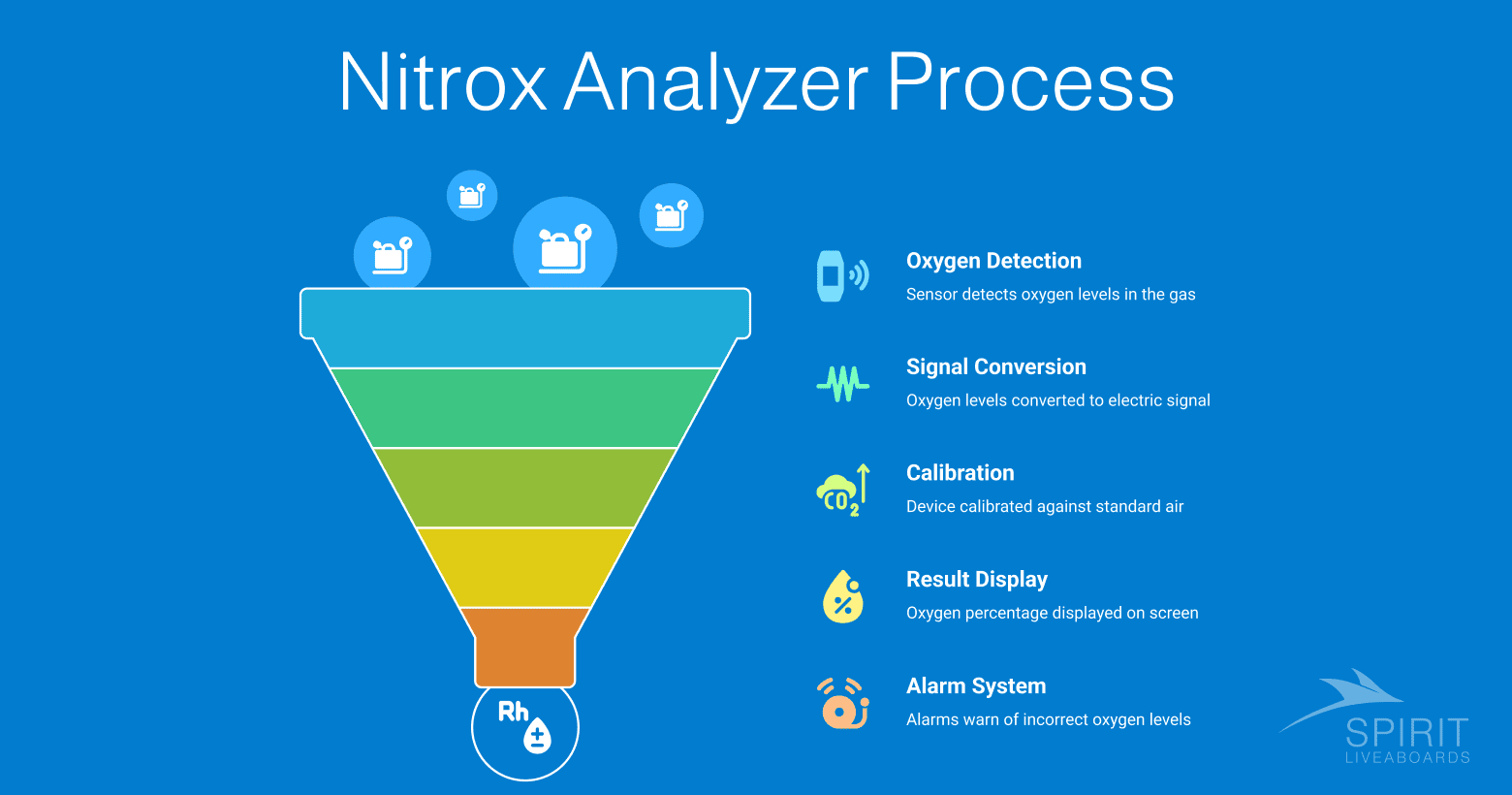
Nitrox analyzers work by measuring the oxygen levels in your scuba tank. Nitrox is a gas mixed with more oxygen than regular air, usually 32% or 36%. This mix helps you stay underwater longer and reduces the risk of decompression sickness.
The main part of it is the oxygen sensor. This sensor detects oxygen in the gas and turns it into an electric signal, then it interprets this signal and shows the oxygen percentage on the screen.
It would be best if you calibrated it before using it. To do this, you compare the result to air, which has 21% oxygen. Calibration ensures proper accuracy.
When you check your tank, the device samples the mixture through a small opening. This ensures it flows at the right speed for the device to work properly. Many units also include alarms to warn you if the oxygen level is too high or too low.
Some adjust results based on temperature changes. This helps you get precise numbers even in different environments.
How to Use a Nitrox Analyzer: A Step-by-Step Guide
Step 1: Attaching the Analyzer to the Cylinder
Start by ensuring your oxygen analyzer is ready to use. Check that the device is clean and working properly. Make sure the valve or regulator is closed before you begin.
Next, attach the flow adapter or restrictor to the regulator. This helps control the flow of gas when you measure it. If your device, like a Divesoft or Analox model, has specific instructions, follow them carefully.
Once the adapter is secure, connect the O2 sensor to the adapter. Make sure the connection is tight so no gas leaks out. Some models may work with additional tools or apps for enhanced functionality, but you don’t need those to gain a basic understanding.
If you’re unsure which setup to use, check your manual or the shop where you purchased it for guidance. This step ensures you’re ready to measure the gas accurately.
Step 2: Turning On and Setting the Device
Turn on your analyzer by pressing the power button. Check that the screen lights up and shows all the necessary information clearly. Many pro models have simple displays that guide you through the process.
If your device has a calibration mode, select it before use. Follow the instructions provided in the user manual to set it up properly. Calibration ensures the right numbers for nitrox divers like you.
Some devices, like DNA-certified analyzers, may require extra steps. If your device asks for any updates or sensor adjustments, make sure you complete them. Always check if the sensor needs replacement to keep your device working accurately.
Once everything is set, you’re ready to move on to analyzing the gas.
Step 3: Taking the Reading: Achieving Accurate Gas Analysis
Open the valve or regulator slowly to let the gas flow into the analyzer. Check the pressure to ensure it’s within the recommended range for accurate measurement. If you are using a Trimix blend, make sure your analyzer is compatible.
Hold the analyzer steady and allow it to read. If your device supports Bluetooth, you can use it to connect to a mobile app for easy tracking. Keep an eye on the screen to confirm the oxygen percentage and the accuracy of the measurements.
If you’re unsure about the numbers, cross-check them with a calibrated analyzer at your dive shop. Always check the battery level before starting to avoid interruptions. Using an affordable and reliable analyzer ensures you get precise results every time.
When done, close the drum regulator and remove the analyzer carefully. This ensures your device stays safe and ready for future dives.
Step 4: Confirming Oxygen Percentage and Adjusting If Necessary
Check the reading on your analyzer for nitrox to confirm the oxygen percentage. Make sure it matches the planned mix for your dive. If the percentage is off, you may need to adjust the gas mix in the drum.
Use gas analyzers that are accurate and reliable to avoid mistakes. If you are using a Divesoft device, follow its instructions to double-check the results. A durable and user-friendly nitrox analyzer makes this process easier and faster.
For precise adjustments, consult your device’s filling setup or a professional at your dive shop. If the numbers still don’t match, recalibrate the device or confirm with another analyzer. Always ensure the oxygen percentage suits the depth and safety limits of your dive plan.
Conclusion
Ensuring the correct oxygen levels in the mix is a key part of preparing for safe and enjoyable dives. By following the steps outlined in this guide, you can confidently confirm your mixture is suitable for your dive plan. Attention to accuracy and proper preparation helps you avoid risks and makes your underwater adventures more enjoyable.
At Spirit Liveaboards, we place your safety and experience at the heart of everything we do. Our luxury liveaboard trips in the Maldives and Fiji provide divers with expert guidance, personalized service, and access to the best dive sites based on current conditions. Our team is dedicated to supporting every aspect of your diving journey, from preparation to exploration, ensuring a safe and unforgettable adventure. Join Spirit Liveaboards for an extraordinary blend of comfort, expertise, and world-class diving.
FAQs
What is a nitrox analyzer, and why is it important?
A nitrox analyzer is a device used to measure the oxygen content in a scuba tank filled with enriched air nitrox (EAN). It ensures you know the exact gas mixture you're breathing, which is crucial for planning safe dives and avoiding oxygen toxicity.
What is enriched air nitrox (EAN)?
Enriched air nitrox is a breathing gas with a higher percentage of oxygen (typically 32-36%) than regular air. It reduces nitrogen absorption, allowing for longer no-decompression limits and shorter surface intervals.
How do I use a nitrox analyzer?
Using a nitrox analyzer involves: 1. Calibrating the device with regular air or a known oxygen percentage. 2. Attaching the sensor to the tank valve or regulator. 3. Slowly opening the tank valve to measure the oxygen percentage. 4. Verifying the reading and recording the gas mix.
Why do I need to calibrate the nitrox analyzer?
Calibration ensures the analyzer provides accurate readings. Without proper calibration, the oxygen percentage measured in your tank might be incorrect, potentially leading to unsafe dive planning.
Can I rely on the dive shop’s nitrox readings?
While most dive shops check their tanks, it's always good practice to verify the gas mix yourself using a nitrox analyzer. This ensures accuracy and gives you confidence in your dive planning.
What should I do if the analyzer shows an unexpected oxygen percentage?
If the oxygen reading doesn’t match the expected mix, inform the dive shop or operator. Do not use the tank until the issue is resolved or a new tank with the correct mix is provided.
Do I need special training to use a nitrox analyzer?
Yes, most enriched air courses (like PADI’s Enriched Air Diver certification) teach you how to use a nitrox analyzer as part of the training. This ensures you understand how to operate the device and interpret the results.
What happens if I dive with the wrong nitrox mix?
Diving with the wrong nitrox mix can lead to oxygen toxicity if the oxygen content is too high for the planned depth. Conversely, if the mix is too low, you may absorb excess nitrogen, increasing the risk of decompression sickness.
Do all liveaboards provide nitrox analyzers?
Yes, most reputable liveaboards, including Spirit Liveaboards, provide nitrox analyzers for guest use. However, you can also bring your own if you prefer.
How does Spirit Liveaboards ensure nitrox safety for divers?
Spirit Liveaboards provides on-board nitrox analyzers and guides divers through proper usage. Their crew is trained to assist with nitrox blending and ensure all tanks meet safety standards, so you can focus on enjoying your dives.


Leave your comment: