


Have you seen Finding Nemo, a Disney Pixar movie? Yes, it featured a clownfish. But did you know that clownfish have a fascinating ability to change their sex? Let’s dive into the underwater world of these unique fish and explore their incredible lives.
Clownfish and Their Habitat (Clownfish Habitat and Behavior)
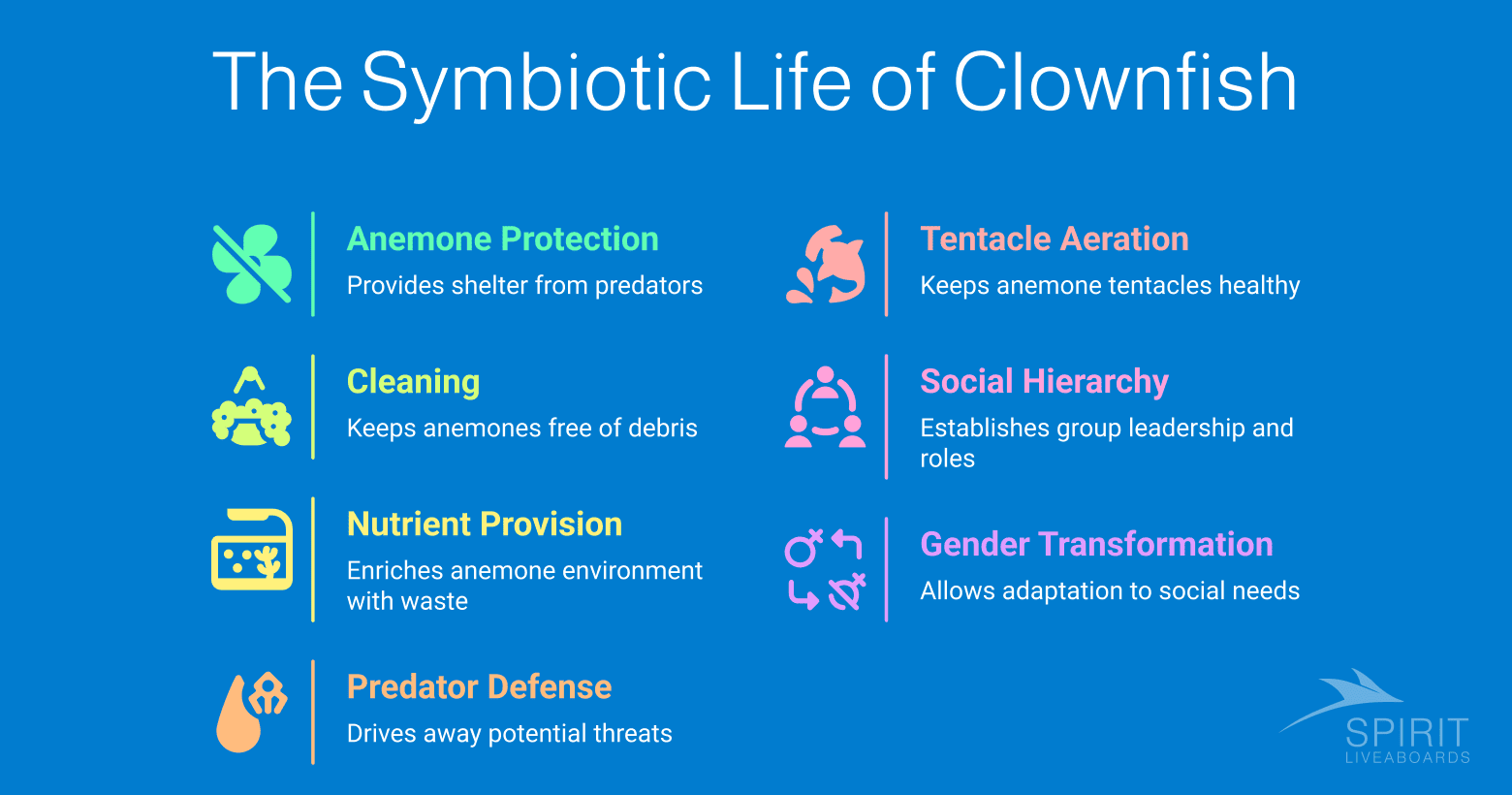
Clownfish, or anemonefish, are small, brightly colored fish that live in coral reefs and form a special bond with specific species of ocean anemones, such as Heteractis magnifica and Stichodactyla gigantea. These fish thrive in warm, shallow waters, where sea anemones protect them from predators. In return, clownfish keep their homes clean and free of debris. This mutual relationship, known as symbiosis, helps both species survive. The anemones benefit from nutrients provided by the clownfish’s waste, which enrich their environment and support their growth. Clownfish also help by driving away predators and aerating the anemone’s tentacles with their movements, keeping them healthy.
When young, or as juveniles, clownfish move close to anemones to stay safe. Over time, they form small groups with a clear social hierarchy. The group leader, the largest fish, can transform into a female if needed, as clownfish are protandrous hermaphrodites. This means they are born male but can change gender later in life. Their ability to adapt to environmental and social needs ensures their survival and reproductive success.
Why Do Clownfish Change Gender (Clownfish Gender Change Process)?
Clownfish change gender as part of their survival strategy. In each group, there is always one dominant male and one female at the top. The smaller males remain below them in the hierarchy. If the female dies, the dominant male undergoes a transformation and becomes a female to maintain the breeding pair. This evolutionary strategy not only ensures continuous reproduction but also stabilizes the population within the group, minimizing the risk of disruption in their small community. This process, called sequential hermaphroditism, is essential for their reproduction and group stability.
What happens when a female clownfish dies (Clownfish Gender Change Process)? The dominant male’s testes shrink, and the immature female tissue in its gonads develops into fully functioning ovaries. Hormonal changes, including a decrease in testosterone and an increase in estrogen, drive this transformation. This hormonal shift can occur within a few weeks, showcasing the biological efficiency of clownfish in adapting to their social structure. This quick adaptation allows clownfish to continue breeding without needing to find a mate outside their group. It’s a remarkable example of how marine life evolves to meet challenges.
Why Is a Clownfish Called a Clownfish?
The clownfish earned its name due to its vibrant colors and bold, contrasting patterns that resemble a clown’s outfit. Their playful, darting movements among anemone tentacles also contribute to their “clownish” reputation. These behaviors and striking appearances make them a favorite among marine enthusiasts.
Life Cycle of a Clownfish
The life cycle of a clownfish is as fascinating as its ability to change gender. Here’s a closer look:
| Stage | Description |
|---|---|
| Egg Stage | Eggs are laid near sea anemones, and the male carefully guards and cleans them until they hatch. |
| Young Stage | After hatching, the fish are small and genderless, staying close to shelter to grow safely. |
| Male Stage | As they mature, they develop into functioning males. |
| Group Hierarchy | The largest fish becomes the leader (female), while smaller males remain inactive. |
| Transition to Female | If the leader is lost, the biggest male transforms into a female to take charge of the group. |
| Leader Role | Once a male changes to a female, the transformation is final, and she leads the group. |
How Long Does a Clownfish Live?
Clownfish typically live for 6 to 10 years in the wild, though their lifespan can extend to 15 years in protected environments such as aquariums. Their feeding habits, which include algae, zooplankton, and small crustaceans, also contribute to the health of their ecosystem. Their long lives allow them to play vital roles in their ecosystems, maintaining the balance of their small communities and coral reef habitats.
Where Clownfish Live
Clownfish are found in tropical waters of the Indian and Pacific Oceans, including the Red Sea and the Great Barrier Reef. Their close association with anemones means they are most often seen in shallow coral reefs, where they dart among the tentacles of their hosts for protection.
The Science Behind the Sex Change in Clownfish
The sex change in clownfish is a complex process driven by their gonads. Born as males with functional testes and undeveloped female gonadal tissue, clownfish can undergo a transformation when necessary. This is called protandry. Hormones regulate this process: testosterone production decreases, while estrogen production increases, enabling the testes to shrink and ovaries to develop.
This ability ensures the group always has a breeding pair. The largest male becomes the new female, while the next largest male takes over as the breeding male. Their environment and social structure dictate this change, showcasing their adaptability.
Male vs. Female Clownfish
The main difference between male and female clownfish lies in their size and role within the group. Females are the largest and most dominant, while males are smaller and subordinate. Only the dominant male and female in the group reproduce, while the other males remain non-breeding. Unlike other reef fish, such as wrasses that often change from female to male, clownfish exhibit a unique male-to-female transformation, highlighting their specialized adaptation to social structures.
Where to Watch These Sex-Changing Clownfish
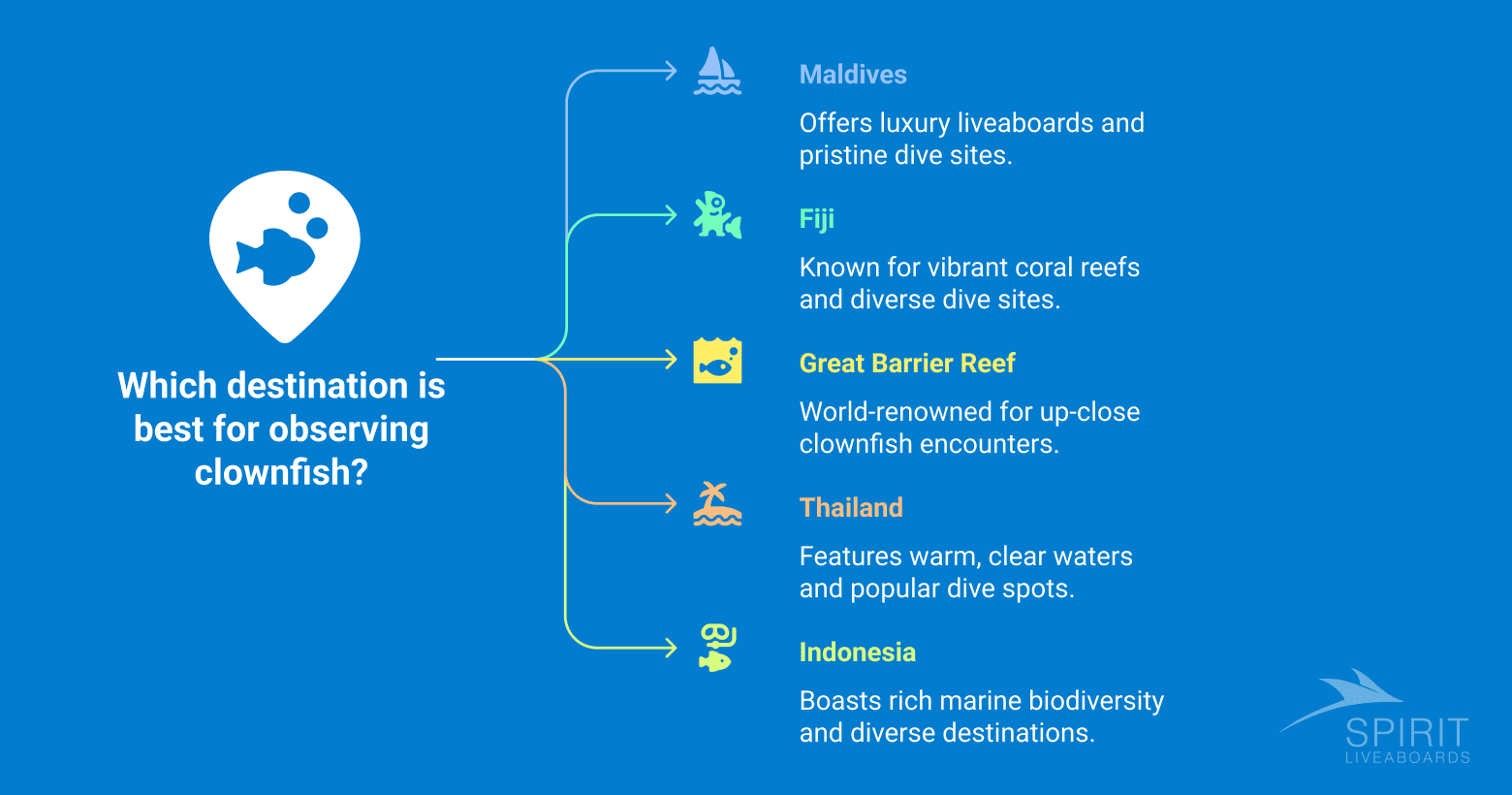
If you’re eager to see these fascinating creatures in their natural habitat, here are five amazing destinations:
- The Maldives
The Maldives’ crystal-clear waters and thriving reefs make it an ideal place to spot clownfish. With luxury liveaboards like Spirit Liveaboards, you’ll have access to pristine dive sites and expert guides. - Fiji
Known as the “Soft Coral Capital of the World,” Fiji offers vibrant underwater scenes where clownfish thrive among the coral formations. Notable dive sites include Taveuni’s Rainbow Reef, the Great Astrolabe Reef near Kadavu, and the Bligh Water area, which are renowned for their stunning biodiversity and clownfish habitats. - Great Barrier Reef (Australia)
Australia’s Great Barrier Reef is a world-renowned destination to observe clownfish up close, darting among sea anemones in the shallows. - Thailand
Thailand’s Andaman Sea, including spots like the Similan Islands and Koh Phi Phi, provides excellent opportunities to see clownfish in warm, clear waters. - Indonesia
Destinations like Raja Ampat, Bali, and Komodo boast some of the richest marine biodiversity on the planet, perfect for observing clownfish and other vibrant sea life.
Conclusion
The clownfish’s ability to adapt and survive in the dynamic underwater world is truly remarkable. From their symbiotic relationship with anemones to their unique sex-changing abilities, they demonstrate the intricate balance of marine ecosystems.
If you’re looking to experience the magic of these colorful creatures firsthand, there’s no better way than exploring the waters of the Maldives or Fiji with Spirit Liveaboards. Our diving experiences bring you face-to-face with the wonders of the ocean, combining expert guidance, personalized service, and unmatched comfort. Dive with us and witness the marvels of marine life like never before.
FAQs
Why do clownfish change sex?
Clownfish change sex as part of their natural reproductive strategy. They are born male and have the ability to become female if the dominant female in their group dies. This ensures the survival and reproduction of their species.
How does the sex-change process work in clownfish?
Clownfish are protandrous hermaphrodites, meaning they start life as males. When the dominant female is no longer present, the largest male undergoes a hormonal and physical transformation to become female, while another male becomes the dominant breeding partner.
Do all clownfish have the ability to change sex?
Yes, all clownfish are born male with the potential to change sex. However, this change only occurs in specific social circumstances, such as when the dominant female of their group is gone.
Why is this sex change important for clownfish survival?
The sex change ensures that clownfish groups maintain a breeding pair, regardless of environmental changes or the loss of the dominant female. This adaptability is crucial for their population stability in reef ecosystems.
Do clownfish only live in anemones?
Yes, clownfish have a symbiotic relationship with sea anemones. The anemones provide protection with their stinging tentacles, while clownfish offer cleaning services and deter predators. This relationship is vital for both species' survival.
What triggers a clownfish to change sex?
The absence of a dominant female triggers the largest male to begin the sex-change process. This transition is influenced by social hierarchy, hormonal changes, and environmental factors within the anemone group.
How long does it take for a clownfish to change sex?
The process can take weeks to months, depending on the individual clownfish and environmental conditions. Hormonal changes and physical transformations, such as increased size, occur gradually.
Are clownfish the only species that change sex?
No, many marine species exhibit sex-changing behavior, including wrasses, groupers, and parrotfish. However, clownfish are among the most well-known examples due to their unique social structure and relationship with anemones.
Why are clownfish important to reef ecosystems?
Clownfish play a vital role in maintaining healthy reef ecosystems. Their relationship with anemones supports biodiversity by providing shelter for other small reef species and deterring potential threats to their host anemones.
Can I see clownfish in their natural habitat on Spirit Liveaboards trips?
Yes! Spirit Liveaboards provides unforgettable diving experiences in the Maldives and Fiji, where you can observe clownfish in their natural habitat. These vibrant reefs are home to many clownfish species, offering a firsthand look at their fascinating behaviors.


Leave your comment: