



What is the best time to dive Fiji?
Knowing this can make all the difference between a good diving experience and an unforgettable one. Known as the soft coral capital of the world, Fiji offers divers stunning underwater landscapes and vibrant marine life. Yet, with its tropical climate presenting unique seasonal variations, finding the ideal time to explore its reefs can be a challenge.
But fear not, in this article, we will guide you through everything you need to know to maximize your underwater adventure.
Weather and Water Conditions in Fiji by Season
Fiji has two main seasons, the dry and the wet.
During the dry season, from May to October, you will have cooler and more stable conditions. The water is usually clear, making it easy to spot vibrant reef fish and colorful corals. In the dry season, water temperatures range from 24°C to 27°C. This makes it ideal if you like cooler waters. The marine life is active, and you might see turtles, eels, and even reef sharks. The famous Rainbow Reef near Taveuni is especially worthseeing at this time.
In the wet season, from November to April, the weather is warmer and more humid. You will experience more rain and sometimes rougher seas. Water temperatures can rise to between 27°C and 30°C. Visibility may be lower due to plankton blooms. However, this season attracts large animals like whales and can offer great chances to see unique species like nudibranchs. The wetter months also make coral more vibrant, but the sea might be less predictable.
So Which Season is Better?
Overall, the best time to explore Fiji’s waters depends largely on your preferences. If you enjoy cooler, clear waters with lots of activity, the winter months are ideal. However, for warmer conditions and diverse marine encounters, the off-season also has its perks.
- Cooler sea conditions (24°C to 27°C)
- Stable and calm seas
- High visibility for exploring sites like Rainbow Reef and Taveuni
Stable and calm seas
| Season | Conditions and Features | Best For |
|---|---|---|
| Dry Season (May to October) | – Cooler sea conditions (24°C to 27°C) – Stable and calm seas – High visibility for exploring sites like Rainbow Reef and Taveuni | – Those preferring cooler seas and clear vision – Ideal for spotting vibrant reef fish, turtles, eels, and reef sharks |
| Wet Season (November to April) | – Warmer sea conditions (27°C to 30°C) – Higher rainfall and chance of rough seas – Plankton blooms attract larger ocean species | – Those seeking warmer conditions and unique aquatic encounters – Opportunities to see whales and colorful nudibranchs – More vibrant corals and diverse underwater life |
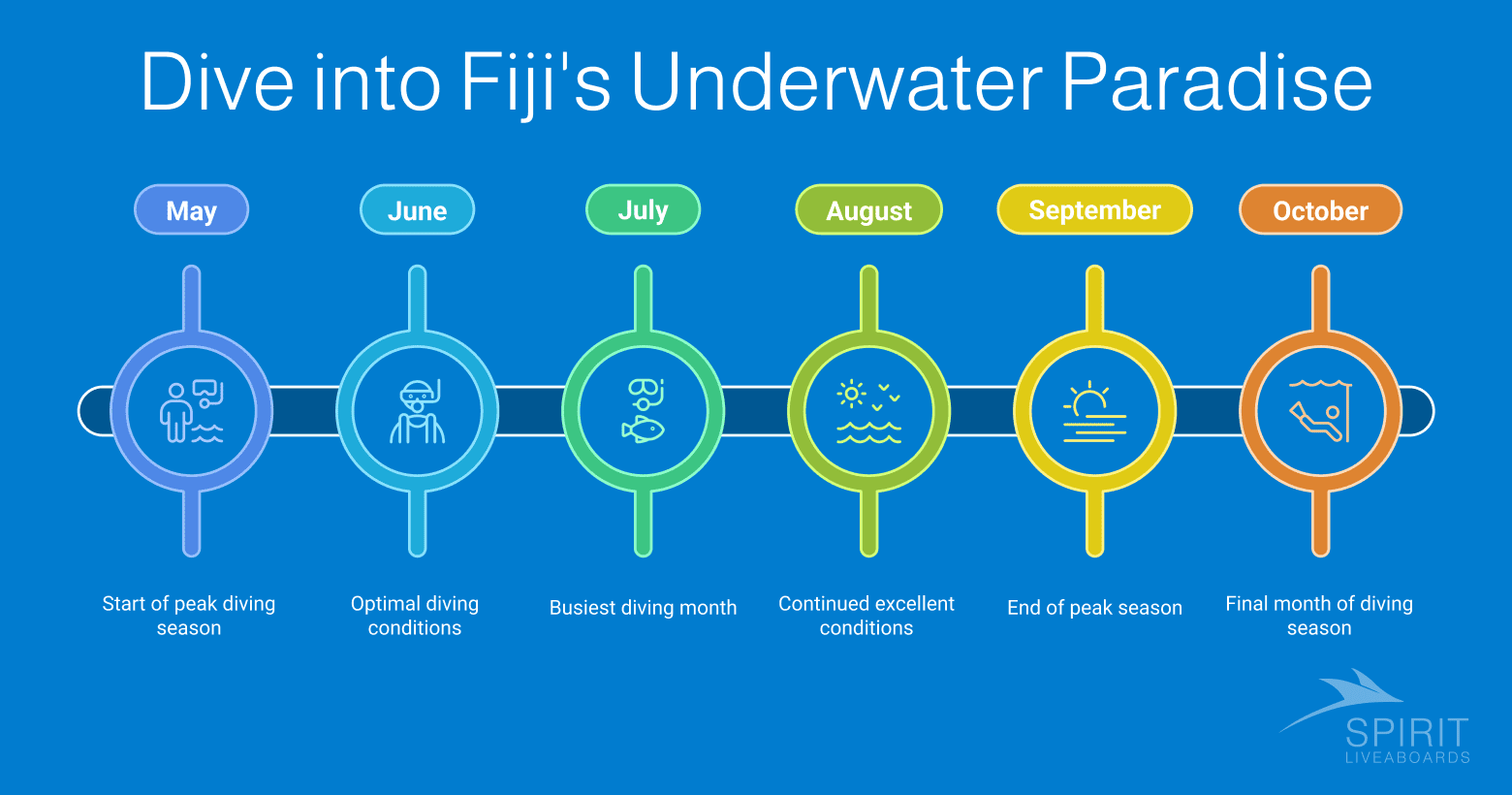
Peak Diving Season in Fiji (May to October)
The months from May to October are a wonderful time to explore the waters of Fiji. During these months, you experience excellent conditions for underwater adventures. The seas are calm, which makes boat trips to dive sites easy and pleasant. You will find clear skies most days. This means natural light can reach deeper into the waters, improving visibility.
The water temperature during this period ranges from 24°C to 27°C. These mild temperatures enhance your diving comfort. They also promote healthy coral life and vibrant marine ecosystems. You will notice the reefs are bustling with activity. You might see a colorful array of soft corals and diverse marine species all around you.
You may also visit popular dive spots during this season. You can explore underwater wonders at any resort or embark on a liveaboard adventure. You might spot a shark gliding silently in the deep blue. The lagoon environments here are breathtaking, with Nadi and Suva among popular starting points. Viti Levu is among Fiji’s best dive sites and offers some of the most impressive dive networks. Meanwhile, Beqa Lagoon is renowned for its incredible reef systems and marine biodiversity.
| Pros | Cons |
|---|---|
| Calm seas for smooth boat trips | Higher demand, leading to crowded dive spots |
| Clear skies for better underwater visibility | Potentially higher prices for accommodations |
| Excellent water clarity | Popular locations may be busier |
| Comfortable sea temperatures | Advanced reservations might be necessary |
| Peak marine life activity | Less flexibility for last-minute bookings |
| Stunning soft corals and diverse species | More competition for tour operators and site access |
| Ideal for both novices and seasoned enthusiasts | — |
Off-Season Diving in Fiji (November to April)
The off-season from November to April offers a different Fiji dive adventure. You can expect a more relaxed setting with fewer divers around. This is the rainy season, so there will be more wet days. The waters are warmer during this time, which might be a pleasant change if you like warmer conditions.
One of the best parts about the off-season is the peace. Dive sites are quieter, allowing for a more private experience. You can often find lower prices for accommodations and tours, making it a budget-friendly option. Some of the most special marine encounters happen during this time. You might spot majestic manta rays gliding through Bligh Water or participate in the best shark dive opportunities.
But it’s also important to be aware of the challenges. The weather can be unpredictable, with storms popping up suddenly. Visibility in the water is generally lower, making it trickier to see what’s around you. Occasionally, cyclones can occur, although they are not guaranteed every season.
Despite these challenges, some prefer this time of year. The allure of quieter waters in the South Pacific is appealing. If you enjoy dive resorts with fewer crowds or seek unique marine life encounters, the off-season might be perfect for you.
| Pros | Cons |
|---|---|
| Quieter dive sites with fewer visitors | Unpredictable weather with more rainy days |
| Often lower costs for accommodations and tours | Lower visibility in the water |
| Special marine encounters like manta rays | Occasional cyclones in the area |
| Warmer water temperatures | Potential for storms affecting dive plans |
| More relaxed experience in the beautiful South Pacific | — |
Conclusion
Choosing the right time for your scuba adventure in Fiji depends on what you wish to experience. The peak season from May to October offers calm waters and clearer skies. This is ideal for exploring iconic spots like the Great Astrolabe Reef and Shark Reef. You can encounter bull sharks, experience vibrant marine life, and capture stunning photos.
The off-season from November to April brings a quieter and more intimate experience. You can dive with fewer people around and explore unique areas like the Somosomo Strait. While the seas might be wilder with stronger currents, the abundant sea life, including species like ribbon eels and moray eels, makes it worthwhile.
For those seeking a luxury diving experience, Spirit Liveaboards offers the perfect blend of adventure and comfort in Fiji. With expert guides and premium amenities, we ensure you explore the best sites while enjoying top-notch service and safety. Trust Spirit Liveaboards to turn your diving trip into an unforgettable journey.


Leave your comment: