

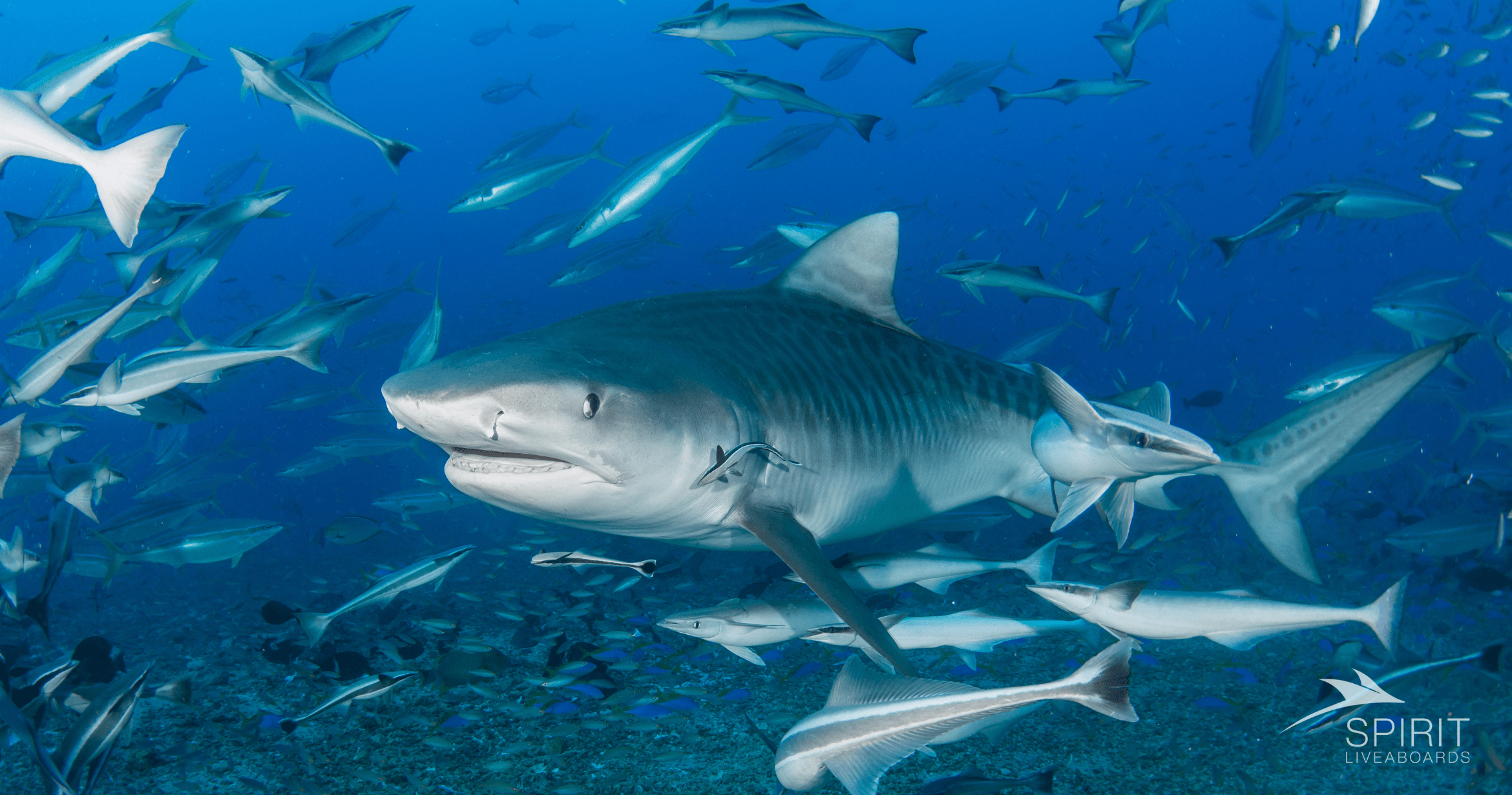

The Maldives is one of the few places on earth where you can find whale sharks in any month of the year. Most destinations get a season. South Ari Atoll gets residents.
A seasonal aggregation means booking a narrow window and hoping the plankton turns up. In South Ari the animals are simply there, and the variable is how well your boat reads the day.
Below: where they are, when each site works, what the rules are in the water, and how the ways of getting to them compare. We run these atolls weekly, so some of this is regulation and some of it is just what we see.
Quick answers
- Year-round sightings: South Ari Atoll (SAMPA), the 42 km protected stretch off Maamigili and Dhigurah.
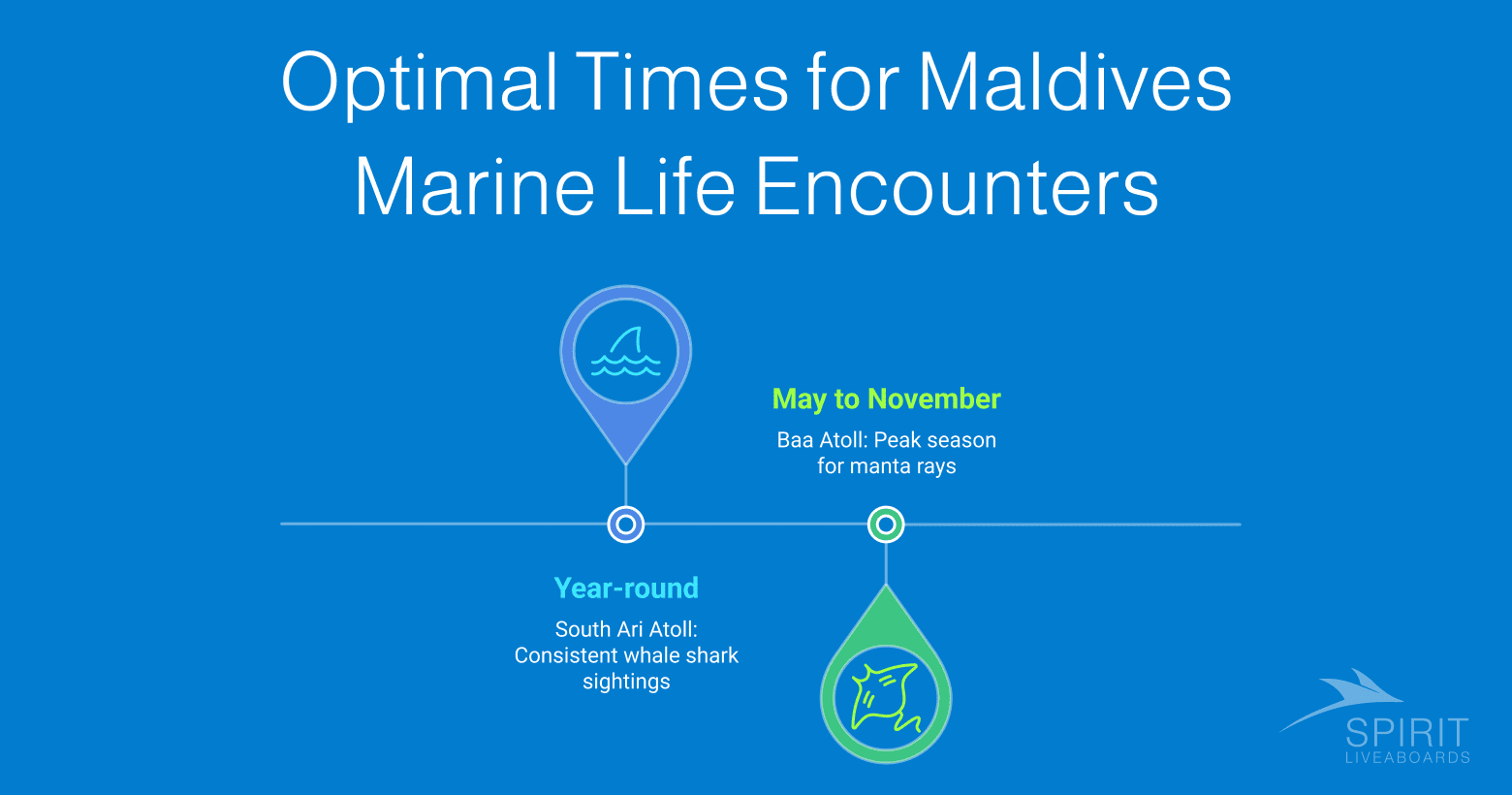
- Seasonal aggregation: Hanifaru Bay, Baa Atoll, roughly June to November, snorkel only.
- Biggest animals: Fuvahmulah in the far south, where mature adults and females turn up.
- Best visibility: December to April (northeast monsoon).
- Best plankton and biggest numbers: May to November (southwest monsoon).
- You will almost certainly be snorkelling, not diving. More on why below.
Why you snorkel with whale sharks instead of diving with them
This is the single most common misunderstanding, and it changes how you plan the trip.
Whale sharks in the Maldives feed on plankton near the surface. In South Ari they cruise the reef edge in the top few metres of water, often with their dorsal fin cutting the surface. Scuba gear puts you deeper than the animal and surrounds you with bubbles, which pushes them away. A mask, fins and snorkel keep you level with the shark and quiet.
In Hanifaru Bay, this is not a preference but law. Scuba diving has been banned inside the bay since 2011.
So a “whale shark dive” in the Maldives is usually a snorkel drop from a dhoni, run between scuba dives on the reef. On board the Spirit of Maldives we run it as a dedicated activity, with the dhoni tracking the animal ahead of the group so nobody has to chase it. If you are travelling with a non-diving partner, this is the part of the trip they get to do with you. Details on that are on our snorkeling in the Maldives page.
Where to find whale sharks in the Maldives
South Ari Atoll (SAMPA): the year-round option
The South Ari Marine Protected Area runs along the southern reef of Ari Atoll, from Maamigili past Dhigurah. It was designated in 2009 and it is the most reliable whale shark aggregation in the Indian Ocean.
The animals here are mostly juvenile males, typically 4 to 8 metres. They are not passing through. Researchers at the Maldives Whale Shark Research Programme have re-sighted the same individuals in this stretch of reef for years, identifying them by the spot pattern behind the gills, which works like a fingerprint.
What this means for you: no season to plan around. Conditions vary, sightings do not really stop.
South Ari is a fixed feature of our Heart of the Maldives itinerary, which crosses North Malé, Rasdhoo, Ari, Felidhu and South Malé over 7 or 10 nights. The same route covers manta cleaning stations and hammerhead dives, so the whale sharks are one part of a full week rather than the whole gamble.
Hanifaru Bay, Baa Atoll: the spectacle, with rules
Hanifaru is a small dead-end bay in Baa Atoll shaped like a funnel. During the southwest monsoon, incoming tides push plankton in faster than it drains out, and the food concentrates into something like soup. Reef mantas arrive in numbers, over a hundred on strong days, and whale sharks join often enough that the crew treat them as likely rather than lucky.
It is a UNESCO Biosphere Reserve core zone, and access is tightly managed:
- Snorkelling only, no scuba.
- Licensed guide required, maximum ten snorkellers per guide.
- Sessions capped at roughly 45 minutes.
- Daily visitor cap in the region of 80 people, with a limited number of boats inside the bay lines at once.
- No touching, no chasing, no flash photography, no motorised devices.
- Rangers on site enforcing all of it.
- Liveaboards cannot enter the bay directly. Boats anchor near Dharavandhoo and guests transfer in by permitted taxi boat.
Timing inside the season matters. The plankton tracks the monsoon and the moon, so the strongest days cluster around the full and new moon between June and November, with July and August usually the peak.
Our 10-night Wonders of the Northern Atolls itinerary includes the Hanifaru excursion when the season is open, and the 7-night version focuses on Baa Atoll. If mantas are the main draw, the Manta Magic Expedition is built around them.
Fuvahmulah: the big ones
Most Maldives whale shark encounters are with juveniles. Fuvahmulah, in the deep south, is different. The seabed there rises around 2,000 metres to meet the reef, and the animals encountered tend to be larger, including mature females rarely seen further north. Tiger sharks are the headline act at this site. Whale sharks are a bonus.
Fuvahmulah sits on our Deep South and Equatorial routes, which run November to April and require Advanced Open Water plus 100 logged dives.
North Ari and the night encounters
Fesdhoo lagoon in North Ari is known for night snorkels where boat lights draw plankton and, sometimes, feeding whale sharks straight to the surface behind the vessel. The same thing happens at anchor in Huvadhoo on our southern routes. You cannot plan it and you cannot book it. Some weeks it happens twice, some seasons not at all.
When to go: month by month
Two seasons, and they trade off against each other.
| Period | South Ari Atoll | Hanifaru Bay | What to expect |
|---|---|---|---|
| December – April | Reliable sightings, calm seas, best visibility of the year | Closed, animals absent | Northeast monsoon. Visibility 25–30 m+, easy surface conditions, comfortable snorkelling. Best window for first-time visitors and nervous swimmers. |
| May – June | Frequent sightings as plankton builds | Season opens, mantas arrive, numbers climbing | Southwest monsoon starts. More plankton means more food, and slightly greener water. |
| July – October | Excellent numbers, visibility varies with current | Peak. Highest concentration of mantas, whale sharks joining regularly | The big-animal window. Busiest at Hanifaru, so permits and slots matter. |
| November | Reliable, conditions stabilising | Season tapering, still strong days early in the month | Transition month. Often the best value of the year and underrated. |
December to April for clear water and comfort. July to October for volume. South Ari works either way, which is why we keep it on the year-round route.
For a fuller breakdown by month, including visibility figures and which itinerary suits each period, see our month-by-month guide to liveaboard diving in the Maldives.
Ready to swim with whale sharks?
Join a guided dive adventure with Spirit Liveaboards and experience the beauty of whale sharks in their natural habitat — safe, calm, and unforgettable.
Book Your Dive TourHow to reach the whale sharks: three options compared
| Resort day trip | Local island guesthouse | Liveaboard | |
|---|---|---|---|
| Range | One atoll, limited by boat speed | One atoll, usually South Ari | Multiple atolls, repositions overnight |
| Flexibility | Fixed schedule, fixed departure time | Good, cheap, weather-dependent | Moves to where conditions are best that day |
| Crowding | Often several resort boats on the same animal | Moderate | Boat sets its own timings, frequently first on site |
| Diving alongside | Limited house reef and nearby sites | Depends on the dive centre | 3–4 dives a day, 25–30 dives per week |
| Cost structure | Excursion fees on top of room rate | Low base, per-trip fees | All-inclusive: dives, meals, cabin, transfers |
A resort puts you in one place and hopes the animals come to it. A liveaboard goes and finds them. Over a week that difference compounds, especially in the southwest monsoon when the productive side of the atoll flips.
A seven-night liveaboard trip typically includes 25 to 30 dives with meals, cabin and dhoni transfers in one rate, which usually works out cheaper per dive than a resort once you add daily boat fees and meals on top of the room. Current rates and departure dates are on the booking page, and any live discounts are listed under special offers. <div class=”cta-block”> <h3>Swim with whale sharks in South Ari</h3> <p>Our Heart of the Maldives itinerary spends time in the South Ari Marine Protected Area on every departure, all year round. Seven or ten nights, 25–30 dives, whale shark snorkels run as a dedicated activity.</p> <p><a href=”https://spiritliveaboards.com/whale-sharks-diving/”>See whale shark trips</a> <a href=”https://spiritliveaboards.com/book/”>Check rates and schedule</a></p> </div>
What the encounter is actually like
You will hear the call from the dhoni before you see anything. Fins on, mask down, quiet entry over the side, and then you are looking into open blue water waiting for a shape to resolve.
When it does, the scale takes a second to process. A 7-metre animal moving at what looks like a lazy pace is moving faster than you can swim. You get thirty seconds, maybe two minutes if the shark is relaxed and the group behaves. Then it drops into the blue and that is that.
Some practical things nobody mentions:
- Do not chase. You will lose. Swim parallel, let the animal come to you, and it often will.
- Water can be green in the southwest monsoon. That is the plankton. Plankton is why the shark is there. Clear water and lots of whale sharks are, to an extent, mutually exclusive.
- Currents run hard on the South Ari reef edge. Reasonable fitness helps. If drift conditions are new to you, our guide to drift diving covers how to handle them.
- Snorkel gear beats scuba here. Bring a mask you know fits.
Code of conduct: the rules that keep this working
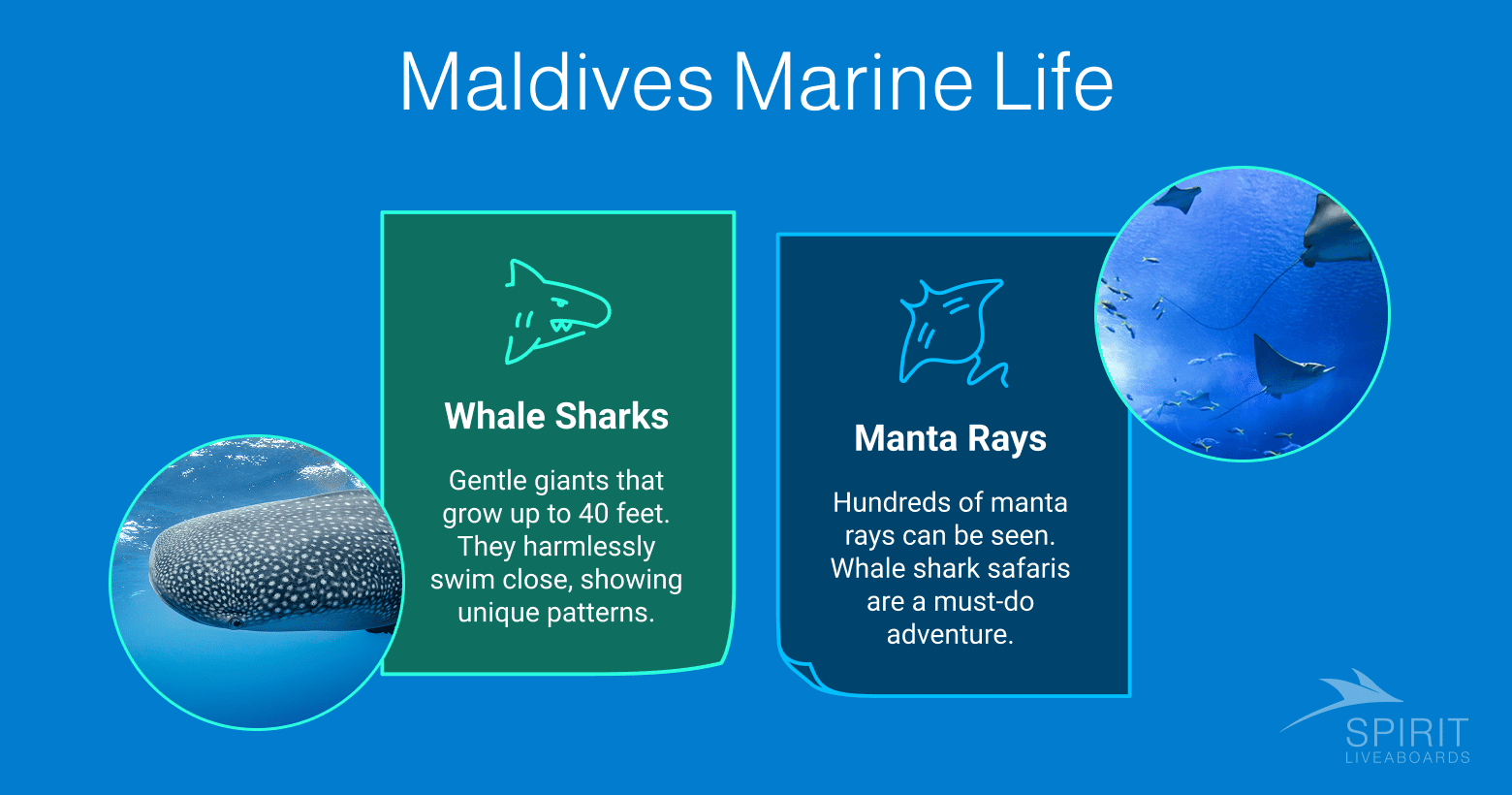
Whale sharks are endangered. The South Ari population takes a lot of boat traffic, and you will see propeller scars on a fair number of the animals, healed over into pale ridges across the back and tail. That is what the distance rules exist to stop.
- Minimum 3 metres from the head, 4 metres from the tail.
- Never touch or ride the animal. Never block its path.
- Approach from the side, never head-on, and never cross in front.
- No flash photography.
- Do not free-dive down onto a shark, stay at the surface.
- One group in the water at a time where operators are coordinating.
- Leave when the animal shows avoidance behaviour: banking away, diving, sharp turns.
If a boat drops twenty people directly on top of a whale shark, walk away from that operator. Every encounter you get is only possible because the animal keeps returning to that reef.
We publish what we do on conservation, including the manta we adopted through the Manta Trust: meet Spirit.
Photography without ruining it for everyone
The whale shark is huge and the water is full of plankton, so the usual rules apply harder than normal: get close on the wide angle, shoot slightly upward, and use available light. Flash lights up particles and irritates the animal, and it is banned in Hanifaru anyway.
Shoot in bursts and stay aware of where other snorkellers are. The single most common way people wreck an encounter is by reversing into someone else’s frame while walking backwards on their fins.
If reefs are as much your subject as the big animals, our coral reef diving guide covers the atoll sites worth the camera.
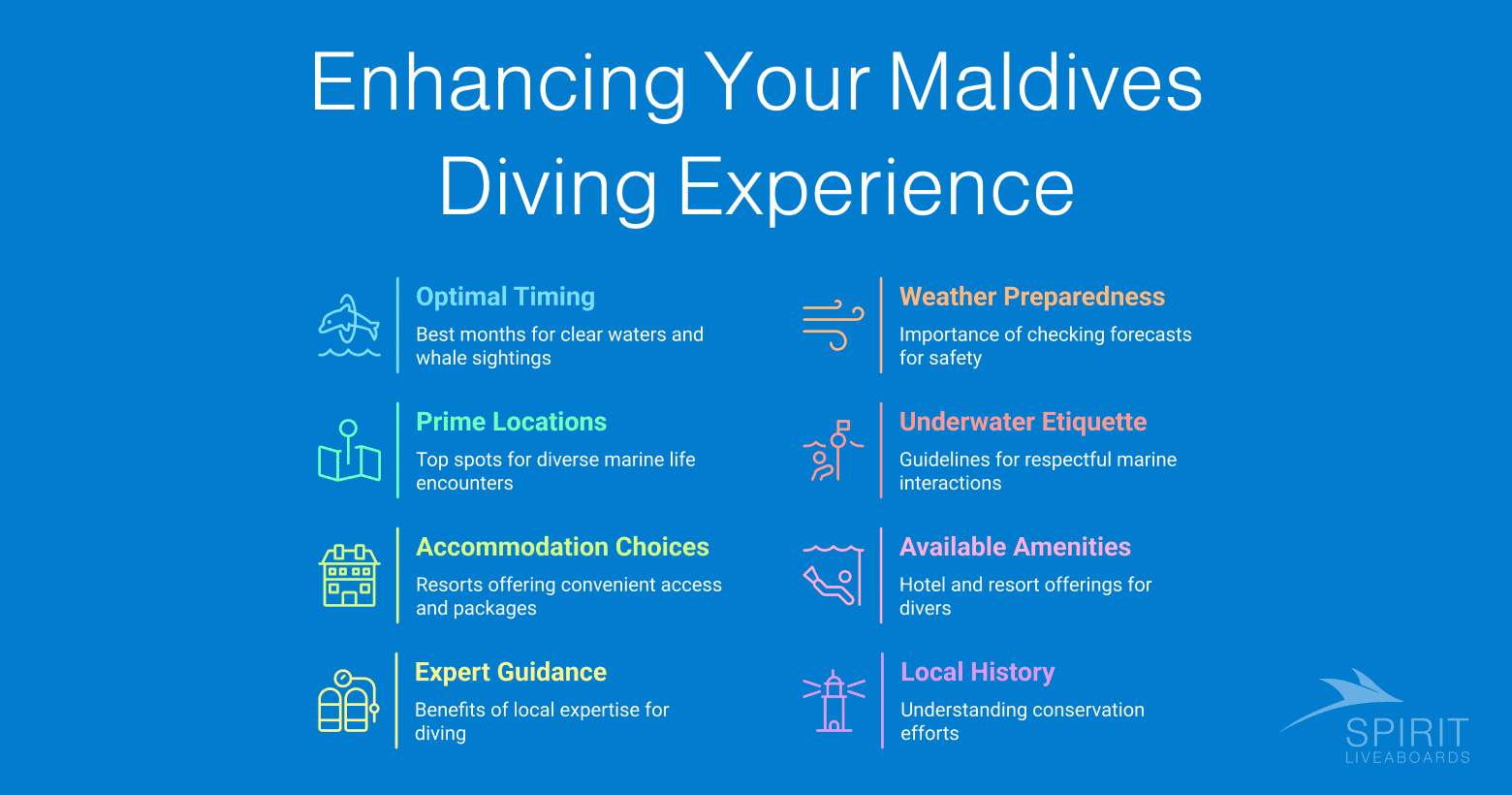
Tips for an Enjoyable Experience
1. Choose the Right Time
Planning your visit from December to May gives you optimal conditions to see whales in the Maldives. During these months, the water is clearer, improving visibility and making it easier to spot these gentle giants. The stable weather also means smoother boat rides and more pleasant conditions, which adds to the overall experience.
2. Select a Good Location
Baa Atoll is one of the best destinations to spot whale sharks. This atoll offers not only crystal-clear waters but also a chance to see a variety of oceanic life, including the famous manta point. Researching locations ahead of time ensures that your trip is centered around prime spots, maximizing your chances of memorable encounters with sea life.
3. Book Your Stay Wisely
Staying at Sun Island Resort and Spa provides easy access to some of the top locations in the Maldives. Many hotels and resorts offer special packages, including all-inclusive tours, equipment rentals, and guided excursions. These packages can offer convenience and value, allowing you to focus on the underwater adventures rather than logistics.
4. Check Out South Ari Atoll
The area around the South Ari Atoll is renowned for consistent whale shark. With convenient access via the airport in South Ari, you can quickly start your excursions. This area offers a vibrant underwater experience, often considered one of the best spots for both novice and experienced divers. Booking your accommodation nearby places you at the heart of the action.
5. Go with Experts
Joining island divers or hiring a reputable tour operator ensures you benefit from local expertise. Experienced guides know the best spots and times to dive, enhancing your chance of seeing whale sharks. The island of Dhigurah is particularly famous, and experts can make your visit even more rewarding.
6. Explore Dhigurah
The island is famous in Maldives travel for its rich marine biodiversity and frequent whale shark sights. The atoll is a great place for various skill levels, ensuring everyone can enjoy the thrills of diving. Exploring it can enrich your adventure, as it combines stunning natural beauty with exciting marine encounters.
7. Prepare for Weather
Being aware of weather patterns, especially during the wet season, is crucial. Sudden changes in conditions can impact your diving plans. Checking forecasts and planning accordingly ensures you optimize your dive time and improve safety. Having a flexible schedule can help you adapt to any weather-related challenges.
8. Follow Guidelines
Underwater etiquette is important for both safety and environmental preservation. Maintaining a respectful distance and allowing sharks to come to you ensures a safer experience. These guidelines promote a harmonious interaction between visitors and marine life, enhancing the overall enjoyment for everyone involved.
9. Use Available Amenities
Before diving, explore what amenities your hotel or resort provides. Many offers include diving gear rentals and guidance, making it easier for you to enjoy your activities. Vilamendhoo Island, for instance, often caters to divers looking for a comprehensive experience.
10. Learn Local History
Visiting conservation areas established as a marine protected area in 2009 and learning about local protection efforts can deepen your appreciation for the region. Understanding the challenges and successes of these initiatives adds a meaningful layer to your diving experience. It connects you to the environment and underscores the importance of sustainable tourism practices.
Plan the trip
Whale sharks are the reason a lot of people book their first Maldives trip, and they are rarely the best part of it. You will also get manta cleaning stations, channel dives with grey reefs and hammerheads, night dives, and coral gardens most people only see in photographs.
The Spirit of Maldives covers all of it. Our whale shark departures and what each itinerary includes are on the whale shark diving page, and if you want to talk through which route fits your dates, get in touch.
FAQs
Can you dive with whale sharks in the Maldives?
Technically yes, in South Ari, but you will see far more of the animal by snorkelling. Whale sharks feed at the surface, and scuba bubbles push them away. Inside Hanifaru Bay scuba is prohibited entirely.
What is the best time of year to swim with whale sharks in the Maldives?
South Ari Atoll has sightings year-round. For clear water and calm seas, December to April. For the largest gatherings, including whale sharks alongside mantas in Hanifaru Bay, July to October.
How likely am I to see one?
On a week-long liveaboard route that includes South Ari, very likely. On a single day trip from one resort, much less certain. Nobody guarantees wild animals, and any operator who does is lying to you.
Are whale sharks dangerous?
No. They are filter feeders with no interest in people. The risk in the water is boat traffic, not the shark.
How big are the whale sharks in the Maldives?
Most in South Ari are juvenile males, 4 to 8 metres. Larger adults, including females, are encountered in the far south around Fuvahmulah.
Do I need to be a certified diver?
Not for the whale sharks. The snorkel excursions are open to non-divers, and non-diving guests are welcome on all our itineraries at a 10% discount on the cabin rate.
How much does Hanifaru Bay cost?
There is a conservation permit per person per 45-minute session. Liveaboards and resorts buy these in advance and pass them on. It funds the Baa Atoll Conservation Fund.
Can I see whale sharks and manta rays on the same trip?
Yes, and it is the reason to go by boat. Between May and November, a route covering South Ari for whale sharks and Baa Atoll for the Hanifaru aggregation gives you both in one week.


Leave your comment: