

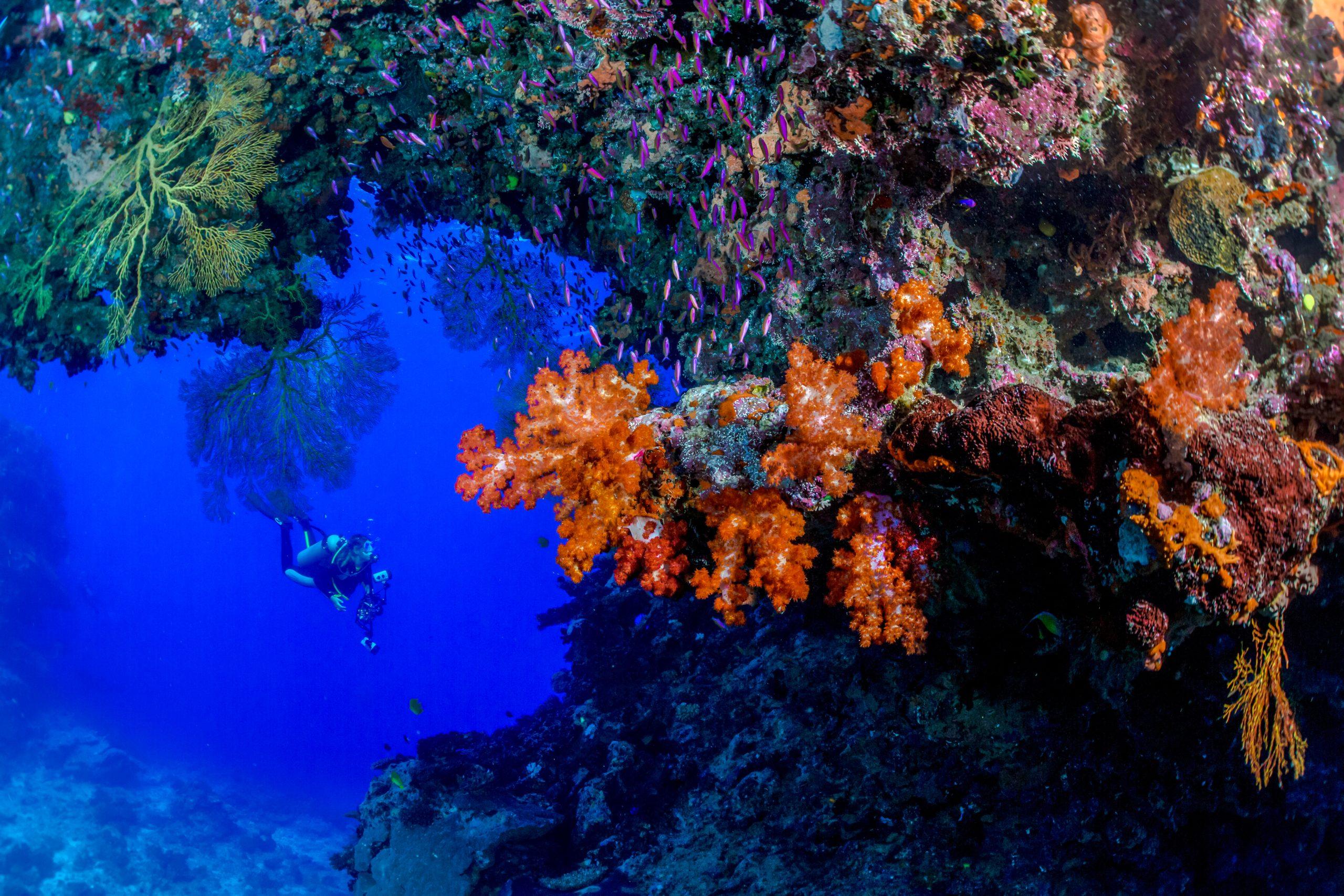

Do you want to capture stunning underwater photos in the Maldives but don’t know how to do so? Don’t worry — I’ve been there too.
It took me some time to figure out the best underwater photography tips, but once I did, my photos improved dramatically. I discovered simple steps that made a big difference.
In this guide, I’m going to share these easy tips to help you get started with underwater photography in the Maldives.
Step 1: Choose Your Camera Rig
When you’re new to underwater photography, it’s best to start simple. If you already own a camera, check if there’s an underwater housing available for it. However, using a bulky DSLR underwater can be tricky, especially for newcomers. It’s hard to manage and can make your dive stressful. A point-and-shoot underwater camera is a better choice for newcomers. These are easier to handle, and thanks to modern technology, they can still take great pictures. As you improve, you can upgrade to a bigger, more advanced camera setup.
If you do move to a larger camera system, consider using aids like arm floats or port floats to help balance the weight of the camera underwater.
The table belwo will guide you in choosing the right gear:
| Category | Beginner Option | Advanced Option | Notes |
|---|---|---|---|
| Camera Body | Point-and-Shoot | DSLR or Mirrorless | A point-and-shoot is lighter and easier for someone new to underwater photography, while DSLRs offer more features. Using a it underwater can be challenging due to its weight, but it provides better quality images. |
| Camera Housing | Mainstream (e.g., Canon/Nikon housing) | Specialized (e.g., Nauticam, Ikelite) | Mainstream housings are generally rated to 30m (100ft), which is good for most recreational water activities. For greater depths, specialized housings provide better durability and can handle more extreme conditions. |
| Lighting | Built-in flash | Strobe or Video Lights | Built-in flash works for close shots, but using a strobe or video light gives better results for larger or distant subjects. Strobes are more powerful but can create backscatter. Video lights provide constant lighting, so you can preview how the shot will look. |
| Buoyancy Aids | Not needed for small setups | Arm floats or similar aids | These aids help balance heavier camera systems underwater, making them easier to manage during underwater exploration. Without them, a large rig can be difficult to control. |
| Post-Processing Tools | Snapseed, Lightroom Mobile | Adobe Lightroom or Photoshop | Post-processing is essential for correcting colors and improving photo quality, as underwater images often have color distortion due to light absorption. |
| Lenses | Standard lens (built-in) | Macro lens or wide-angle lens | A macro lens allows you to capture detailed close-up shots of small marine life. Wide-angle lenses help capture more of the underwater scenery. |
Step 2: Get Your Diving Dialed In
Before you start capturing amazing underwater photos, it’s important to get comfortable diving with a camera. Here are some key points to focus on:
- Master Buoyancy: Staying steady is crucial for clear photos. Practice your buoyancy control so you don’t float up or down while shooting. This helps you hold the camera still for sharper images.
- Start with a Compact Camera: Using a compact camera is easier underwater because it’s light and simple to handle. Practice using it before your trip so you’re familiar with the controls.
- Practice Camera Settings: Get comfortable adjusting settings like ISO, aperture, and shutter speed. These can make a big difference in your photos. Start with auto settings, then move to manual when you’re ready.
- Use Internal Flash for Close Shots: If you’re shooting subjects up close, the internal flash of your camera works fine. For larger or farther subjects, an external strobe or light is a better choice.
- Safety First: Always stay aware of your surroundings. Communicate with your dive buddy and follow basic safety rules. Diving with a camera can be distracting, so keep safety in mind.
Step 3: Learn and Practice Basic Underwater Photography Concepts
When you’re starting out, it’s important to take it slow and focus on the quality of your shots. Rushing through your dive or snapping too many photos without thinking will often lead to blurry or poorly framed pictures.
Here are some simple tips for underwater photography:
- Get closer to your subject: Water reduces clarity and color, so the closer you are to your subject, the better the details and colors will appear. Try to get closer instead of zooming in, as zooming can often reduce image quality.
- Use natural light in shallow water: When you’re in shallow areas, take advantage of the natural light. Sunlight will give you better colors and brightness without the need for a flash.
- Follow composition guidelines: Good composition makes a huge difference. Use the Rule of Thirds to balance your shots, shoot upward to give your subject more presence, and focus on the eyes to create a strong connection with the viewer.
- Manual white balance adjustment: Adjust the white balance manually to correct the blue or green tint often caused by water. This helps bring back natural colors, especially in deeper areas where light is limited.
- Move from auto to manual settings: As you get more comfortable, try using manual settings like adjusting the ISO, aperture, and shutter speed. This gives you more control over the final result and can improve your photos.
- Post-processing: Editing your photos afterward is essential. Even with the best settings, underwater pics can benefit from a little color correction and sharpening to bring out the best details.
Step 4: Take Good Care of Your Equipment
As a newbie underwater photographer, it’s crucial to take proper care of your camera and housing to ensure everything functions well and lasts longer. Before each outing, make sure to check the seals and o-rings on your housing. These need to be clean and seated correctly to prevent any water from entering the housing. It’s also helpful to insert silica gel sachets inside your housing to absorb moisture and avoid any fogging during your time underwater.
After your session, take time to rinse your camera gear in fresh water to remove any salt, sand, or debris. It’s a good idea to soak the housing as well and press the control buttons while it’s submerged to ensure nothing gets stuck inside. Once cleaned, allow your gear to air dry completely before storing it. Proper drying and storage are essential to keep your equipment in top condition and ready for the next time you capture stunning underwater photographs.
Taking these steps will help you avoid damage to your equipment and ensure it remains in good working condition for your next adventure in the underwater world.
Tips for Equipment Care
| Task | Why It’s Important | How to Do It |
|---|---|---|
| Check seals and o-rings | Prevents water from entering your housing. | Inspect and clean seals before each underwater session. Make sure they’re seated correctly. |
| Insert silica gel | Keeps moisture out and prevents fogging. | Place silica gel sachets inside your housing to absorb excess moisture. |
| Rinse and soak after use | Removes salt, sand, and debris that can damage your gear. | Soak your camera housing in fresh water and press the buttons while submerged to flush out any salt. |
| Dry and store properly | Keeps your gear in good condition and ready for your next underwater adventure. | Let everything air dry completely. Store in a cool, dry place until your next underwater session. |
Step 5: Respect the Environment
When you’re exploring the ocean as a diver and capturing underwater pictures, it’s important to always respect the environment around you. One of the most important things to keep in mind is your responsibility towards marine life. You should never harass or manipulate the creatures you encounter. Getting too close to your subject can cause stress to marine animals, so be sure to give them space and observe from a respectful distance. If you’re shooting macro photography, use your camera’s macro mode to zoom in without disturbing the wildlife.
Another key consideration is to make sure your gear doesn’t damage the reef. Coral reefs are delicate ecosystems, and even a small touch can cause harm. Be mindful of where you place yourself and your equipment. This is especially true when shooting underwater video or if you’re working with a larger, more advanced underwater setup.
Following these tips will not only help you learn how to capture amazing shots beneath the surface but also ensure that the ocean remains healthy and vibrant for future divers.
Why the Maldives is an Ideal Location for Underwater Photography
Here are the top 5 reasons why the Maldives is a heaven for underwater photography.
1. Crystal Clear Waters for Amazing Clarity
The Maldives is known for its incredibly clear water, which is essential for any underwater photographer. The clarity means fewer particles in the water, helping you capture sharp and vivid images. You don’t have to worry about murky water ruining your shots. With such great visibility, even a basic underwater compact camera can produce impressive results. The clear water makes it easy to focus on marine life, allowing you to take underwater pictures with minimal distractions.
2. Vibrant Marine Life and Endless Subjects
The Maldives is home to some of the most diverse marine life on the planet, making it a dream destination for underwater photographers. From colorful coral reefs to manta rays, whale sharks, and vibrant schools of fish, the variety of life makes every dive exciting. This abundance of subjects is perfect for those wanting to practice both expansive shots and close-up photography. Whether you’re just learning the basics of underwater photography or you’re a seasoned pro, you’ll always have something interesting to shoot. You can use aperture priority to control depth of field and capture close-ups of tiny creatures or wide shots of entire schools of fish.
3. Perfect Lighting Conditions for Great Shots
The natural ambient light in the Maldives is one of its greatest assets. With bright sunlight penetrating the shallow waters, you can often shoot without needing a flash or strobe. This is especially useful when you’re diving in shallow areas, as the sunlight provides perfect natural lighting to bring out the vivid colors of coral reefs and fish. If you’re shooting deeper, using a white balance or underwater mode will help you maintain natural colors. This lighting makes it easy to take a shot without complicated lighting setups, allowing you to focus more on composition.
4. Unique Underwater Landscapes for Dramatic Compositions
The Maldives offers not only beautiful marine life but also fascinating underwater landscapes like caves, tunnels, and drop-offs. These unique features allow you to experiment with different shooting angles and techniques. For example, using the “get low” technique, where you shoot upward from beneath your subject, can create a dramatic effect and make marine life stand out against the surface. Exploring these underwater terrains gives you plenty of opportunities to apply top tips like framing your shots using the environment, which is a crucial part of underwater photography.
5. Optimal Dive Conditions for Beginners and Pros
The Maldives is known for its calm waters, warm temperatures, and mild currents, making it ideal for photography enthusiasts. These easy water conditions allow you to focus on your photography without the distraction of strong currents or cold water. This is the perfect setting to practice the basics of underwater photography, whether you’re just starting out or looking to refine your skills. You can spend more time framing your shots, adjusting your settings, or experimenting with different techniques without feeling rushed by challenging underwater conditions.
Diving with Spirit Liveaboards
Diving with Spirit Liveaboards offers you a luxurious and personalized experience in the Maldives. With expert guides who have decades of knowledge, you’ll explore the best sites, perfectly suited for those looking to capture stunning images. Whether you’re using a high-quality camera or a simpler setup, Spirit Liveaboards ensures you have the right environment to take good underwater photographs. The premium amenities on board focus on safety and comfort, allowing you to fully enjoy your time underwater. For clearer shots, they can help you use the underwater mode or even recommend using an underwater strobe for better lighting. Along with a commitment to eco-friendly operations and cultural immersion, this experience is ideal for those wanting to improve their skills in the world of underwater photography while enjoying some of the best diving in the world.
Conclusion
In conclusion, if you’ve ever thought about taking underwater photographs, the Maldives is the perfect place to start. With its clear waters, diverse marine life, and stunning underwater landscapes, it’s a dream destination for underwater photographers. Diving with Spirit Liveaboards gives you access to the best dive sites, along with the guidance of experts, ensuring that you learn how to take good photos of the incredible marine life. Whether you’re using the best camera or a simpler model, always make sure you use your camera inside the housing properly to protect it. The joy of capturing beautiful underwater scenes is unmatched, and whether you’re aiming for creative shots or practicing wildlife photography, the experience is truly rewarding. Even if you’re also an avid diver or interested in learning from a marine biologist, the Maldives offers something special for everyone. So, get ready to see underwater like never before and capture unforgettable memories.


Leave your comment: