


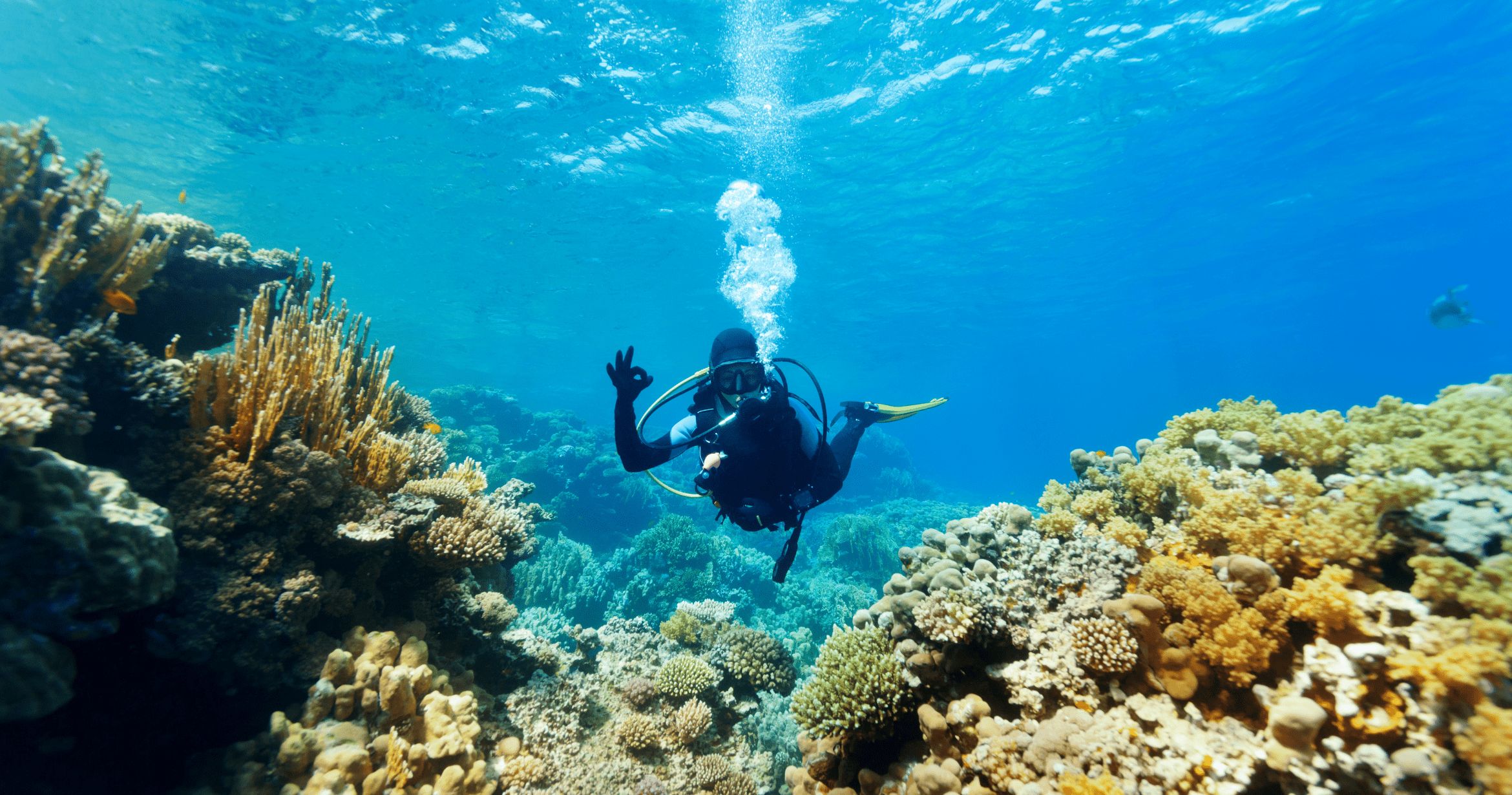

Choosing the right scuba gear is essential for a safe, comfortable, and unforgettable dive vacation. Whether you’re a beginner or an experienced diver, the right equipment can make all the difference.
In this article, we’ll share 5 practical tips to help you select the best scuba gear packages tailored to your needs, so you can dive with confidence and focus on exploring the underwater world.
Tip 1: Prioritize Fit and Comfort
Choosing scuba gear that fits well and feels comfortable is essential for both safety and enjoyment. Poorly fitting equipment can lead to leaks, discomfort, and even dangerous situations underwater.
A well-fitting mask prevents leaks, fins that fit properly reduce the risk of cramps, and a snug wetsuit maintains body temperature.
Comfortable gear allows for efficient movement, better buoyancy control, and longer dive times.
When your gear fits well, you can focus on the dive, not on adjusting your equipment.
How to Test for Comfort
- Mask Fit: Start by placing the mask on your face without using the strap. Inhale gently through your nose to create a seal—the mask should stay in place without leaking. Check for pressure points on your forehead or cheeks; a good mask should feel snug but not painful. If you have facial hair, ensure the skirt (the soft part of the mask) fits comfortably around your face to create a proper seal.
- Fins: When trying on these, wear your dive boots if you use them. Your toes should reach the end of the foot pocket without being cramped, and your heels should stay securely in place. Walk around to test flexibility and comfort; they should feel snug but not tight, with no pinching or rubbing. Open-heel designs with adjustable straps are ideal for divers who need a customizable fit.
- Wetsuit: A wetsuit should fit snugly without restricting movement. Check for gaps around the neck, wrists, and ankles, as these can let in cold water and reduce warmth. Move your arms and legs to test flexibility—it should feel like a second skin, not too tight or too loose. For cold water diving, consider a thicker wetsuit or a drysuit for added warmth.
- BCD (Buoyancy Control Device): Put on the BCD and adjust the straps for a snug fit. It should feel secure but not constricting. Inflate and deflate the BCD to ensure it doesn’t ride up or feel uncomfortable. If your BCD has integrated weight pockets, make sure they are easy to access and don’t dig into your sides.
- Regulator: While regulators don’t require a “fit” like other gear, the mouthpiece should feel comfortable and not cause jaw fatigue. Test breathing through it to ensure it feels natural and doesn’t restrict airflow.
Tip 2: Match Your Diving Environment
Your diving environment plays a big role in choosing the right gear. What works for a tropical reef won’t always suit a cold-water dive site.
In warm water, like at a dive resort near a tropical reef, you need lighter one. A thin wetsuit (3mm or less) works well. It keeps you comfortable without overheating. For cold water, you need thicker insulation. A 7mm wetsuit or even a drysuit keeps you warm in chilly conditions.
Regulators also differ. In cold water, you need a regulator designed to handle low temperatures. These prevent freezing and ensure smooth airflow. In warm water, a standard regulator works fine.
Fins matter too. In tropical waters, lightweight fins are ideal. They help you move easily through calm waters. For colder or stronger currents, stiffer fins give you more power and control.
How to Choose Gear for Your Dive Site
| Gear | Warm Water | Cold Water | Mixed Environments |
|---|---|---|---|
| Wetsuit | Thin (3mm or less) | Thick (7mm) or drysuit | Removable layers |
| Regulator | Standard | Cold-water rated | Standard |
| Fins | Lightweight, flexible | Stiff, durable | Adjustable |
| Snorkel | Bring for surface swimming | Not typically needed | Bring if needed |
Tip 3: Focus on Quality and Durability
When planning your scuba dive, investing in quality gear ensures a safe and enjoyable diving experience. Durable equipment lasts longer and performs better, especially on challenging dive trips like exploring a wreck.
How to Identify Well-Made, Long-Lasting Gear
- Check the materials. High-quality product uses strong, durable materials that resist wear and tear.
- Look for trusted brands. Reputable brands often have better craftsmanship and reliability.
- Read reviews. Other divers’ experiences can help you gauge the quality of the product.
- Inspect the stitching and seals. Neat stitching and tight seals show attention to detail.
Key Features to Look for in Gear
| Gear | Key Features |
|---|---|
| Mask | Tempered glass lens, comfortable skirt, adjustable strap, good seal |
| Regulator | Easy breathing, cold-water performance, durable hoses, reliable second stage |
| BCD | Comfortable fit, sturdy material, easy-to-use inflator, integrated weight pockets |
| Dive Computer | Clear display, long battery life, user-friendly interface, reliable depth sensor |
Dive the Maldives with Us
Explore the crystal-clear waters of the Maldives on a luxury liveaboard diving trip. Perfect for all levels, our guided tours take you to the most breathtaking dive sites in the region.
Book Your Dive TourTip 4: Consider Your Experience Level
Your experience level plays a big role in choosing the right scuba packages. Beginners and experienced divers have different needs.
How to Choose Gear Based on Your Experience
| Category | Beginners | Experienced Divers |
|---|---|---|
| Type | User-friendly | Advanced, customizable options |
| Renting vs. Buying | Rent first to try options before booking your own | Invest in high-performance one for long-term use |
| Focus | It should be reliable, that works well in open water conditions | Get one with adjustable settings for fine-tuning |
| Advice | Ask dive staff for recommendations suited to your level | Upgrade it over time with accessories for your diving style |
| Certification | Consider PADI certified equipment for safety and performance standards | Look for one that enhances your diving experience |
Tip 5: Evaluate Packages for Value
Whether you’re diving in the Bahamas or exploring shark-filled waters, the right package ensures you have everything you need. Here’s how to evaluate packages for the best value:
How to Choose the Right Package
| Feature | What to Look For |
|---|---|
| Inclusions | Check if the package includes essentials like a weight belt, regulator, and BCD. |
| Quality | Ensure the package is from trusted brands and meets safety standards. |
| Versatility | Find one that works in different conditions, like warm waters or shark dives. |
| Price | Compare packages to find the best price without compromising quality. |
| Convenience | Choose packages that simplify your dive trip, so you can focus on the experience. |
Conclusion
Choosing the right scuba gear is key to a safe and unforgettable dive vacation. Whether you’re a beginner or an experienced diver, prioritizing fit, quality, and suitability for your environment ensures a seamless experience. For those seeking the ultimate diving adventure, Spirit Liveaboards offers luxury liveaboard trips in the Maldives and Fiji.
With expert guides, personalized service, and premium amenities, they take care of every detail — so you can focus on exploring the best dive sites in comfort and style. Ready to dive in? Book your trip with Spirit Liveaboards and experience the pinnacle of liveaboard diving.
Upcoming Maldives Dive Tours
FAQs
What should I look for in a scuba diving package?
Look for packages that include essential dive tools like a regulator, wetsuit, and dive computer. Check if they offer extras like free dive insurance or Nitrox for advanced divers. Packages at all-inclusive dive resorts often provide the best value, covering everything from tools to dive excursions.
Are liveaboards suitable for new divers?
Yes, liveaboards cater to all experience levels, including new divers. Many offer PADI certification courses or scuba review courses to help you build your knowledge and skills. Always check if the liveaboard provides PADI instructors for guidance.
Do I need to bring my own dive equipment?
No, most liveaboards and all-inclusive dive resorts provide high-quality scuba equipment, including Scubapro regulators, wetsuits, and masks.
How do I book the best dive travel experience?
Book with trusted travel experts or directly through reputable companies like Spirit Liveaboards. They offer luxury liveaboard trips to top diving destinations like the Maldives and Fiji, ensuring personalized service, safety, and unforgettable underwater adventures.


Leave your comment: