


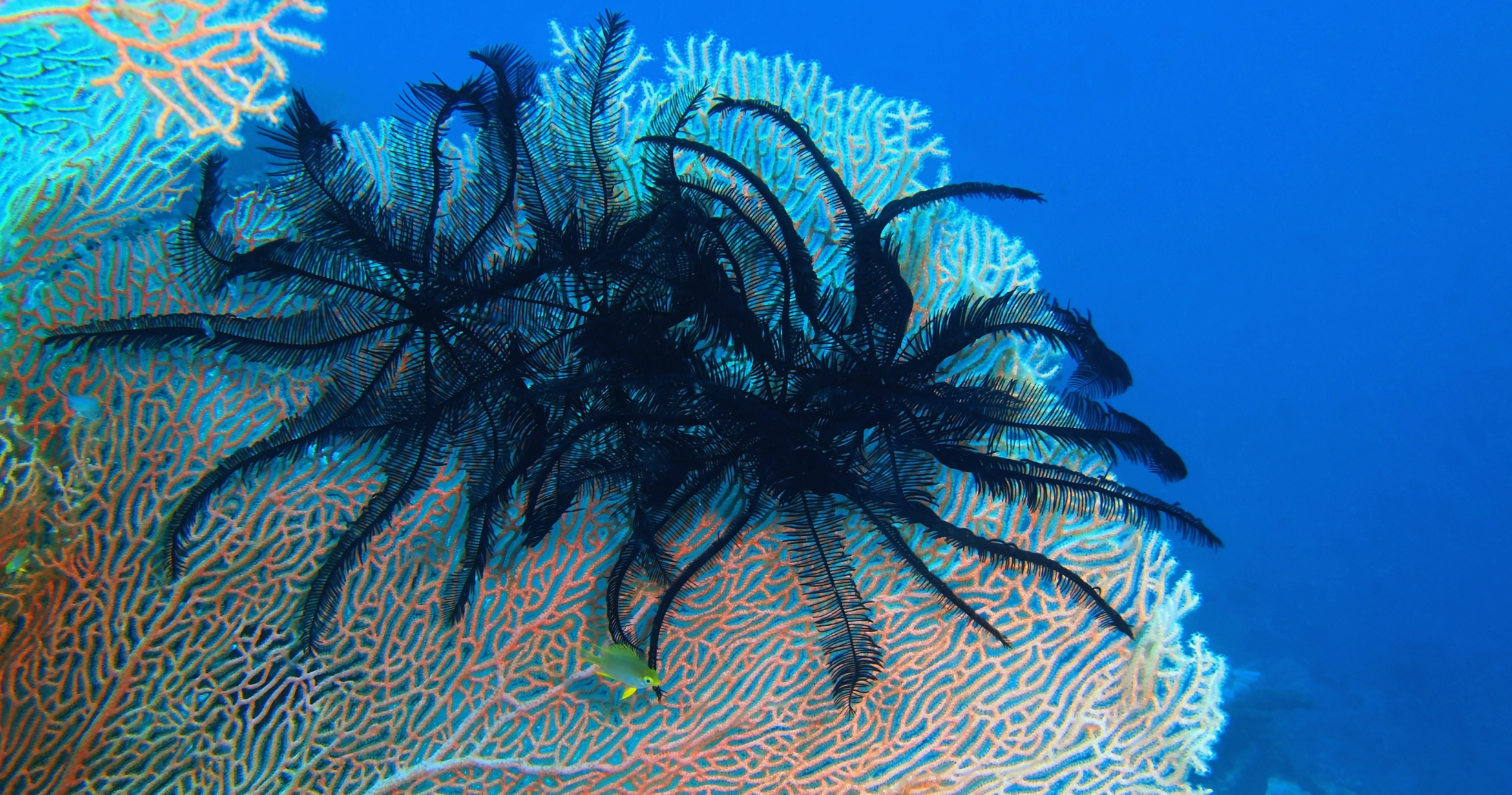

Have you ever wondered what lies behind the delicate beauty of crinoids, those enchanting sea creatures that look like underwater flowers?
These ancient animals, dating back over 450 million years, hold the answers to some of the ocean’s greatest mysteries.
In this article, we’ll dive deep into their fascinating world, exploring what crinoids are, their incredible history, and where you can witness their elegance today.
What Are Crinoids?
These star-shaped marine animals belong to the same family as starfish and sea urchins and are part of an ancient group that has existed for millions of years. They evolved a unique way to live in the ocean by attaching themselves to the sea floor with a stalk.
Their body, called the calyx, is surrounded by feathery arms that help catch food like plankton. These arms move gently with the water, creating a beautiful display. In the past, these creatures were more common and could grow in large numbers.
The stems are an important part of their structure, made of small, disc-shaped segments that help them stay upright. Fossils of these stems are often found and studied by scientists. This ancient group first appeared during the Cambrian period and thrived through the Silurian era.
If you ever see a fossil or a living specimen, take a moment to admire it. These animals have an incredible history and a fascinating place in the story of life in the ocean.
Types of Crinoids
Crinoids come in two main types: sea lilies and feather stars. Both are part of the same ancient group but live in different ways. Let’s take a closer look at each type.
Sea Lilies
These are crinoids that have a long stalk to anchor themselves to the sea floor. They stay fixed in one place, usually in deeper waters. Their stalk keeps them upright, and their feathery arms spread out to catch food like plankton. They are more common in areas with strong ocean currents that bring plenty of food their way.
Feather Stars
Feather stars don’t have a stalk, which makes them more mobile. They use tiny claw-like structures called cirri to grip rocks, coral, or other surfaces. Feather stars can also swim short distances by moving their arms gracefully. You’ll often find them in shallower, tropical waters, like in Fiji and the Maldives.
Top 5 Destinations to See Crinoids
1. The Maldives
The Maldives is an extraordinary destination for witnessing crinoids, thanks to its pristine coral reefs, crystal-clear waters, and thriving marine biodiversity. Feather stars, a type of crinoid, thrive in the Maldives’ nutrient-rich currents, clinging to vibrant corals or gently waving their feathery arms to capture plankton.
The excellent underwater visibility allows you to fully appreciate their intricate designs and vivid colors, whether you’re diving in iconic spots like Ari Atoll or exploring the deeper reefs of North and South Male Atolls. The Maldives also offers unique night diving opportunities, where crinoids often detach and gracefully move, creating a mesmerizing underwater spectacle.
Whether you’re a seasoned diver or a beginner, the Maldives provides accessible dive sites for all skill levels, and luxury liveaboards, like Spirit Liveaboards, elevate the experience by taking you to remote crinoid-rich sites in ultimate comfort. For anyone seeking to witness the beauty of these ancient marine creatures, the Maldives is truly unparalleled.
2. Fiji
Fiji is a remarkable destination to witness crinoids in their natural habitat. Known for its vibrant coral reefs and crystal-clear waters, Fiji offers incredible opportunities to explore ecosystems teeming with life. The famous Rainbow Reef in the Somosomo Strait, with its colorful corals and nutrient-filled currents, is a prime spot to observe these fascinating creatures clinging to coral branches or drifting gracefully. Sites like the Great White Wall are especially breathtaking, with their sheer walls covered in soft corals, sponges, and these ancient marine wonders, creating a spectacular underwater display. Fiji’s warm tropical waters are home to diverse marine life, and the rich biodiversity enhances every dive, offering encounters with these graceful animals alongside other vibrant reef creatures. Whether you’re a beginner or an experienced diver, Fiji’s dive sites provide easy access to this unique piece of ocean history.
3. Raja Ampat, Indonesia
Raja Ampat in Indonesia is one of the best places to see crinoids. The reefs here are full of life. You can spot them on coral walls and limestone outcrops while diving. They use their tube feet to catch food particles in the water. The nutrient-rich currents make it a perfect habitat for crinoids to thrive. Raja Ampat is also home to stunning marine biodiversity, making every dive an exciting adventure. Many of these reefs have been around since ancient times, dating back to periods like the Carboniferous. Exploring these waters gives you a glimpse into the beauty of crinoids and their fascinating world.
4. Tubbataha Reefs Natural Park, Philippines
The Tubbataha Reefs Natural Park in the Philippines is an incredible place to see crinoids. The park is a UNESCO World Heritage Site with vibrant coral reefs and rich marine life. Crinoids are common here, clinging to corals along steep walls or gently moving with the current. You can spot their pinnules extending to catch food particles drifting in the water. The nutrient-rich environment makes it easy to observe their fascinating feeding behavior.
This area also offers a glimpse into the history of marine life. The crinoid stems you see are part of an ancient echinoderm group that has thrived for millions of years. Crinoids evolved long before many other marine species, and exploring these reefs feels like stepping into a living timeline. The unique geology of the reefs, with their steep drop-offs and coral gardens, adds to the excitement of discovering these amazing creatures.
5. The Great Barrier Reef, Australia
The Great Barrier Reef in Australia is a fantastic place to explore crinoids. These ancient creatures first appeared in the seas millions of years ago, making them a living link to Earth’s history. You can find them clinging to coral reefs or gently swaying in the currents. Their feathery arms, called pinnules, help them catch tiny particles of food drifting in the water.
The structure of these creatures is fascinating. The calyx is made of small plates, supported by an internal skeleton made of ossicles. The reef’s unique environment, with its nutrient-rich waters, provides a perfect habitat for these animals. Exploring this underwater world feels like stepping back in time to the Paleozoic and Cretaceous eras, when crinoids were thriving. You’ll also notice small grooves on their arms, which help direct food to their mouths. This combination of ancient history and natural beauty makes the Great Barrier Reef a must-visit destination.
Conclusion
Crinoids are among the most fascinating ancient creatures you can witness underwater, offering a glimpse into Earth’s incredible history. These animals, part of the phylum Echinodermata, first appeared during the Ordovician period and have thrived for millions of years. Their delicate bodies, often anchored to the sea or resting on the ocean floor, are supported by a structure made of calcium carbonate. The striking symmetry of their feathery arms adds to their beauty as they gracefully filter food from the water. Despite their ancient origins, crinoids remain a vital part of marine ecosystems, even as their remains undergo natural decay, forming the fossils that reveal their remarkable past.
Destinations like the Maldives and Fiji offer you the best chance to experience these enchanting marine animals. Spirit Liveaboards ensures your journey is unforgettable, with luxury liveaboard trips that combine expert guidance, premium comfort, and access to the most pristine dive sites. Dive with us and discover the magic of the ocean floor!
FAQs
What is a crinoid?
A crinoid is a marine invertebrate belonging to the echinoderm family, which also includes sea stars and sea urchins. They have feathery arms used for filter feeding and are sometimes called “feather stars” or “sea lilies.”
Are crinoids animals or plants?
Although they resemble underwater flowers, crinoids are animals. They use their feathery arms to capture plankton and other tiny food particles from the water.
How long have crinoids existed?
Crinoids are among the oldest marine creatures, with fossil records dating back over 480 million years, making them one of Earth’s most ancient surviving species.
Where can crinoids be found?
Crinoids live in oceans worldwide, from shallow coral reefs to deep-sea environments. In the Maldives and Fiji, divers often spot them clinging to coral formations, sponges, or rocky outcrops.
How do crinoids feed?
Crinoids use their feathery arms, lined with tiny tube feet covered in mucus, to trap plankton and organic particles drifting in the water. The food is then passed down to their mouth.
Can crinoids move?
Yes! While sea lilies remain anchored, feather stars can crawl, swim, and even "walk" using their cirri (small leg-like structures). Some species perform graceful swimming movements by undulating their arms.
Are crinoids related to sea stars?
Yes, crinoids belong to the echinoderm phylum, which includes sea stars, brittle stars, sea cucumbers, and sea urchins. They share similar biological traits, such as radial symmetry and a water vascular system.
Do crinoids have predators?
Yes, crinoids are preyed upon by certain species of fish, sea urchins, and crabs. However, their ability to regenerate lost arms and their cryptic coloration help them avoid predators.
Why are crinoids important to marine ecosystems?
Crinoids play a key role in the ocean’s ecosystem by filtering plankton, contributing to nutrient cycling, and providing shelter for small marine creatures that hide among their feathery arms.


Leave your comment: